

I knew Kubrick without really knowing him.
I had seen fragments of his work and studied certain scenes, and that was enough to understand that he stood apart. There was a form of total control in the way he worked, a precision in every detail that did not need to be emphasized to be felt. His films seemed entirely constructed, from beginning to end, and that coherence gave them a particular weight.
But I had never taken the time to engage with that work in a more complete way.
That changed when I discovered Eyes Wide Shut.
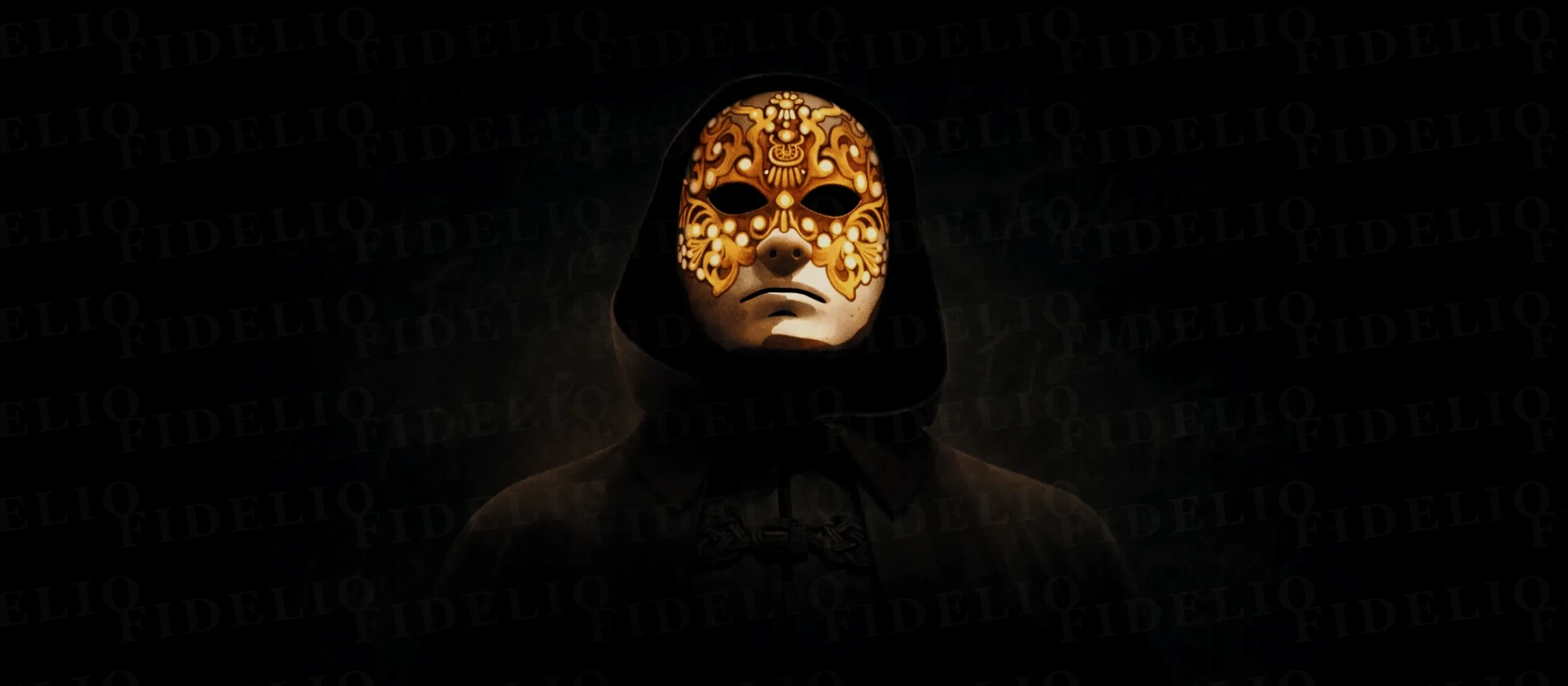
An initiation into cinema
This film felt like an initiation, not because it taught me something in a direct or theoretical way, but because it altered the way I looked at a film. It made me realize that a film does not have to explain itself in order to be understood, and that it can produce an experience that exists before interpretation.
Throughout the film, I remained in a state of uncertainty. I never really knew where it was leading, and instead of trying to reduce what I was seeing to something immediately understandable, I allowed the film to unfold on its own terms. There was a constant sense that everything was precisely constructed, yet without any desire to make that construction explicit.
What stayed with me was not a clear idea, but the perception of something present that could not be approached directly, as if the film was operating at a level that resists immediate understanding.
The bedroom conversation: the emergence of an imbalance
They are in their bedroom, talking about the previous night, about desire, about the way men look at women, and about the assumptions each one makes about the other.
Bill speaks with confidence, and his certainty seems to rest on a stable framework that allows him to interpret what he sees. He believes that women are less driven by impulse, that they function differently, and that this difference creates a form of stability.
It is a way of thinking that reassures him, because it gives him a sense of control over what he believes he understands.
Alice does not challenge him directly, and that is precisely what makes what follows more destabilizing. She lets him develop his reasoning, and then introduces a question that does not contradict him but shifts the ground on which his certainty rests. When she asks him whether he truly feels nothing when examining his patients, he answers in a way that reinforces his position.
Then she simply says that if men knew what women think, they would see things differently.
From that moment, something begins to move, not in what is said explicitly, but in the space that opens behind it.

The officer: the moment that does not follow logic
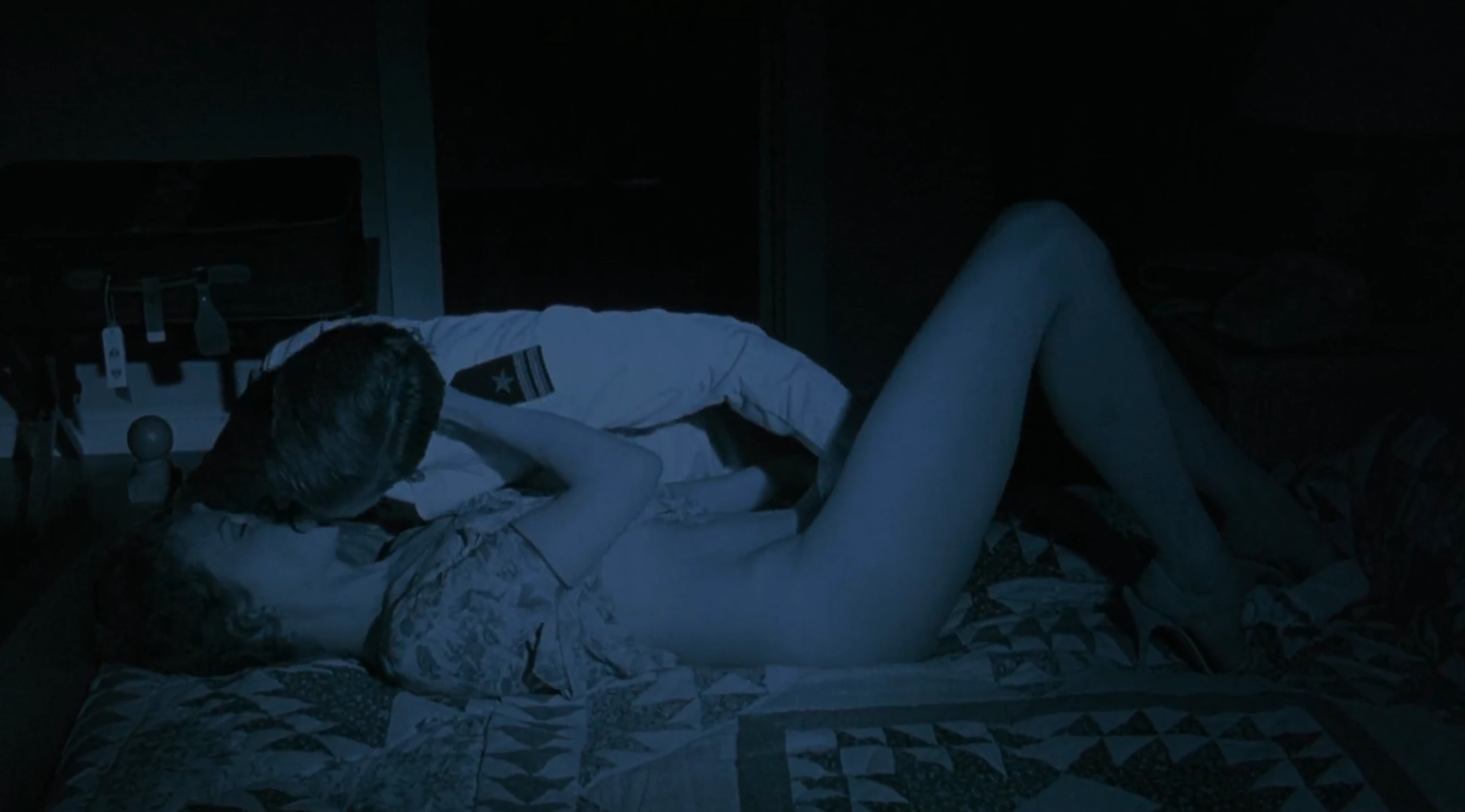
She recalls a moment from a vacation when she saw a naval officer, and what she describes is not a story, but a brief perception that had a disproportionate effect on her.
There was no relationship, no development, and no context that could justify its importance. It was a simple moment, and yet it was enough to disrupt her internal state.
What she explains is not a lack or a dissatisfaction, but the appearance of something that does not follow a clear structure. At one point, she imagined leaving everything behind for that man, not because it made sense, but because the possibility existed.
This is what destabilizes Bill, because what he hears cannot be explained within the framework he uses to understand reality. It is not the idea of betrayal that unsettles him, but the fact that it does not respond to any recognizable cause.

The images: the need to make the invisible visible
During the night, Bill becomes increasingly absorbed by images of his wife with the officer, even though nothing actually happened.
These images are not memories, but constructions that he produces in order to give form to what he cannot grasp otherwise.
Alice spoke about something internal, something that exists without necessarily taking shape in reality, but Bill cannot remain at that level. He translates what she said into something visible, as if turning it into an image could make it more manageable.
However, this transformation does not clarify anything. It reinforces the disturbance, because the images he produces do not come from Alice but from his own interpretation. What he sees is not her experience, but the way he organizes what he cannot fully understand.
This process extends beyond him, because it reflects a more general way of perceiving. Faced with incomplete elements, we tend to construct coherence by filling in what is missing, and in doing so we end up confusing what we project with what is.
The images that haunt him do not reveal Alice. They reveal the structure through which he tries to understand her.
The prostitute: the attempt to return to something stable
After the conversation, the instability that appeared internally begins to affect the way Bill relates to what surrounds him.
When he is insulted in the street, it resonates in a particular way because it touches something that is already weakened. What is said externally finds an echo in what is happening internally, which gives the impression of a continuity between the two.
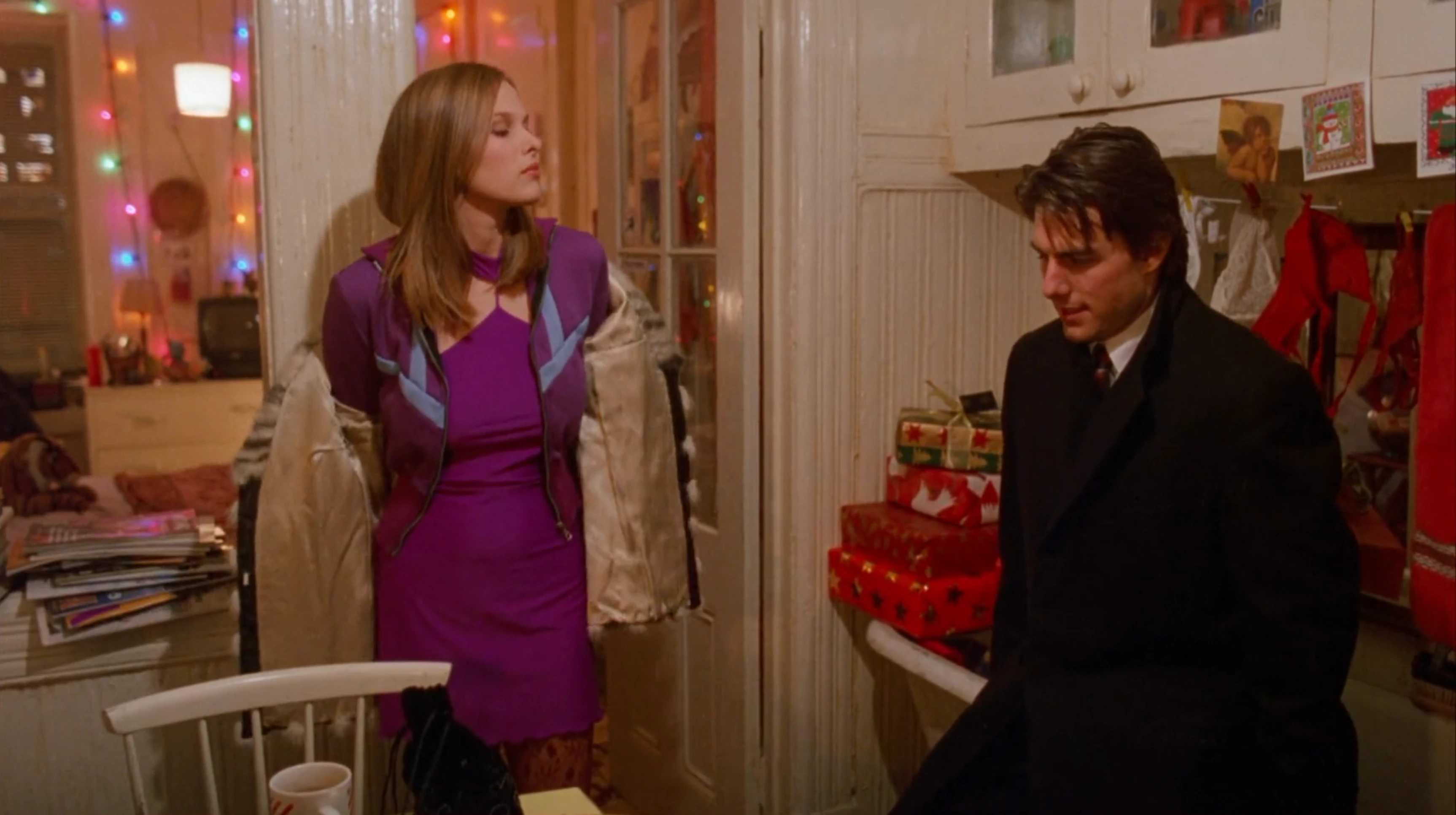
When he goes to the prostitute, his intention is not limited to desire. He is looking for a situation that restores a sense of clarity, where the roles are defined and where he can rely on a structure that does not shift.
However, this attempt does not lead to what he expects, because what he is trying to restore is not located in the situation itself. It gradually becomes clear that what he is looking for cannot be reestablished through external actions.
The costume shop: a first rupture in the framework
Before continuing his night, Bill meets an old acquaintance who tells him about a gathering that operates outside of ordinary structures.
In order to access it, he needs a costume, and he enters a shop late at night where he obtains what he needs by insisting and using his position.
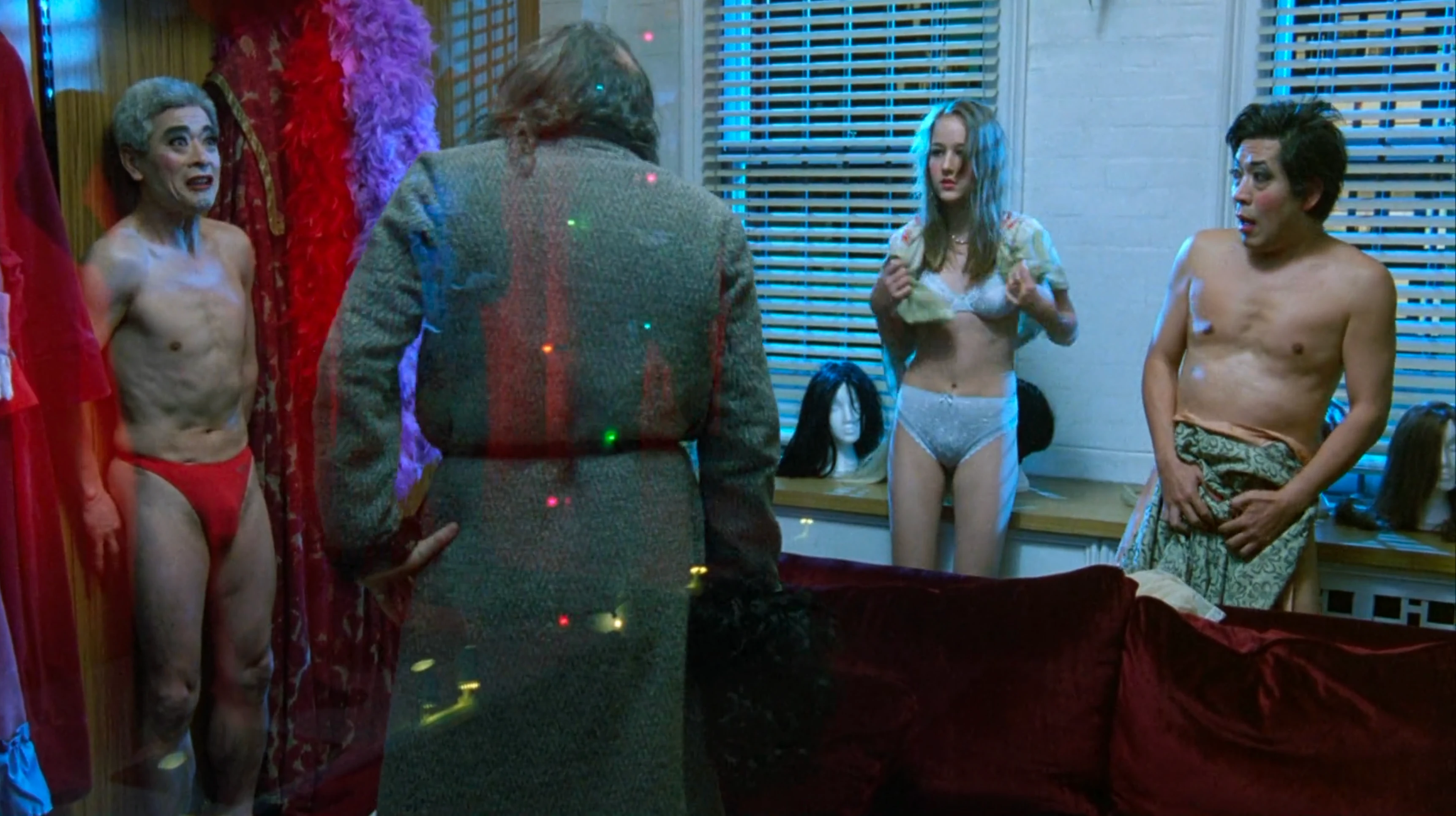
This moment already introduces a shift, because the situation he encounters there does not follow the logic he expects. The shop owner’s daughter is discovered with two men, and instead of reacting in a way that would reaffirm authority or protection, the father chooses to negotiate.
What is revealed here is not an isolated event, but a different organization of relationships, where desire, money, and power intersect without clear boundaries. This moment weakens the framework through which Bill usually interprets situations.
The ceremony: the experience of a limit
When Bill arrives at the ceremony, he believes he is approaching something that holds meaning.
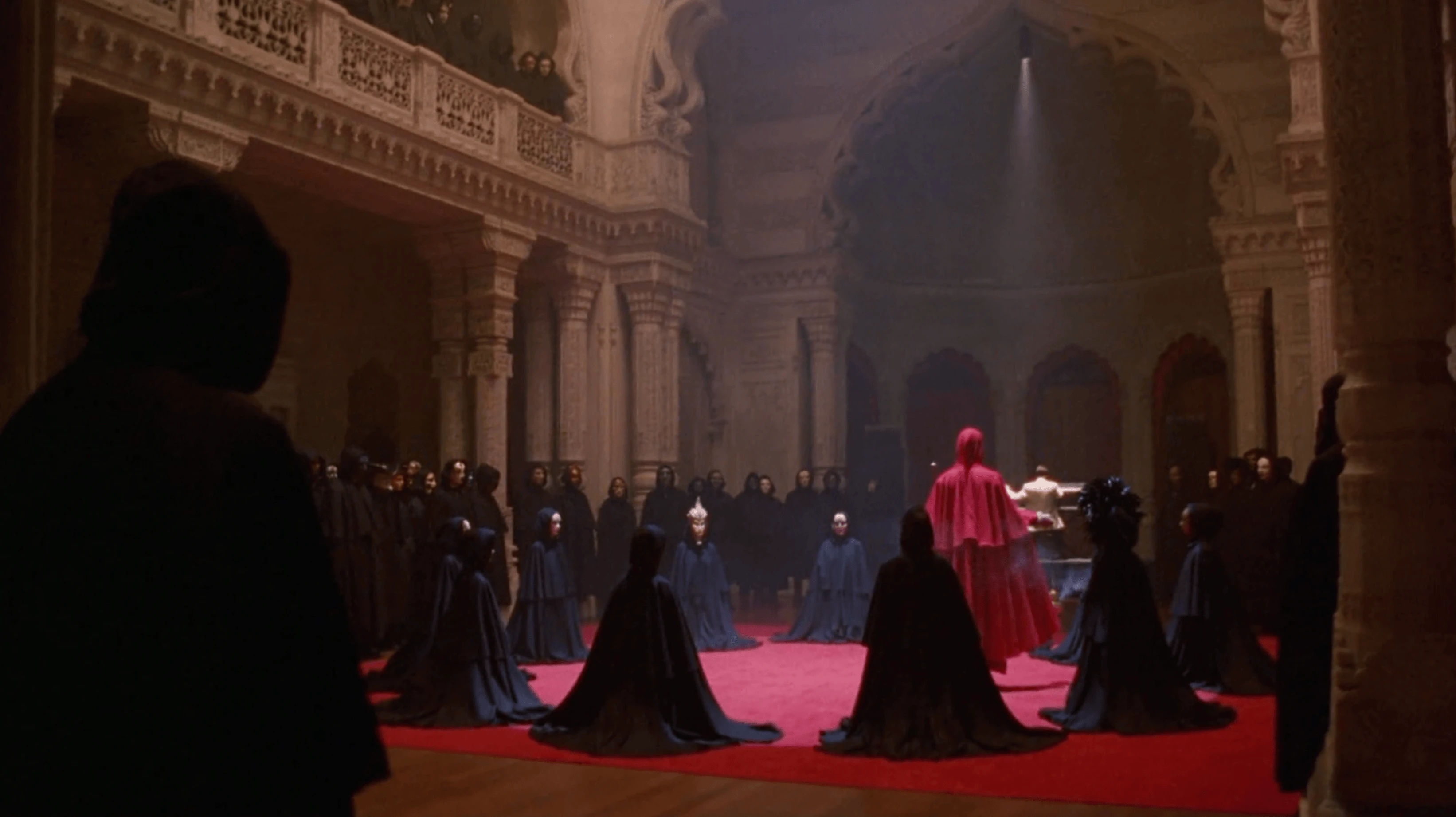
The space is organized, structured, and governed by codes that give it a certain coherence, yet the use of masks removes the possibility of identifying individuals and understanding what is taking place.
Everything is visible, but what is seen cannot be accessed in a meaningful way. He observes without understanding, and when he is asked to leave, it is not only because he is in danger, but because he does not have access to the level at which things are actually unfolding.
This scene does not reveal a hidden truth, but exposes a limit in the act of perception itself. It suggests that what we see is not necessarily what we are able to understand.
Alice’s dream: the presence of what remains unseen
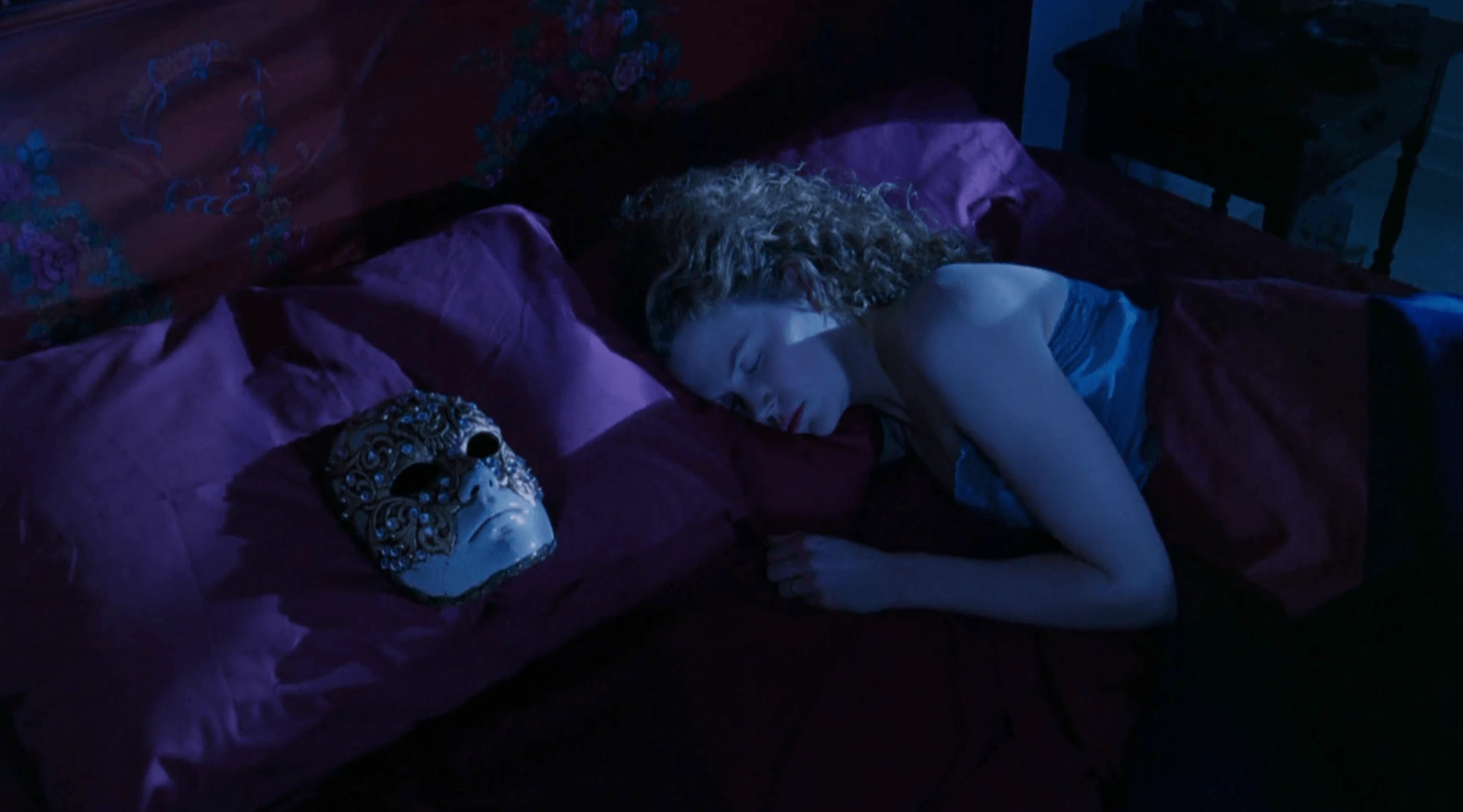
Alice’s dream extends what had already been suggested by presenting something that exists internally without being constrained by what can or cannot take place in reality.
She describes a situation in which she is completely free, without restraint, and aware of Bill’s presence while continuing her actions.
What appears here is not a possibility that could be realized, but a dimension that exists independently of whether it becomes visible or not. This suggests that what we perceive in others is always partial, because it only includes what is expressed.
There remains an entire internal space that does not pass into reality, but that still participates in what a person is.
Why the film leaves a lasting impression
The film does not offer a clear explanation, and this absence is what allows it to persist.
It places the viewer in a position where interpretation is necessary, but never complete. What we perceive is always fragmented, and the meaning we construct from it allows us to navigate what we experience, even though it remains incomplete. Over time, this constructed meaning tends to be mistaken for reality itself.
Kubrick does not seek to correct this process, but to make it perceptible.
Conclusion
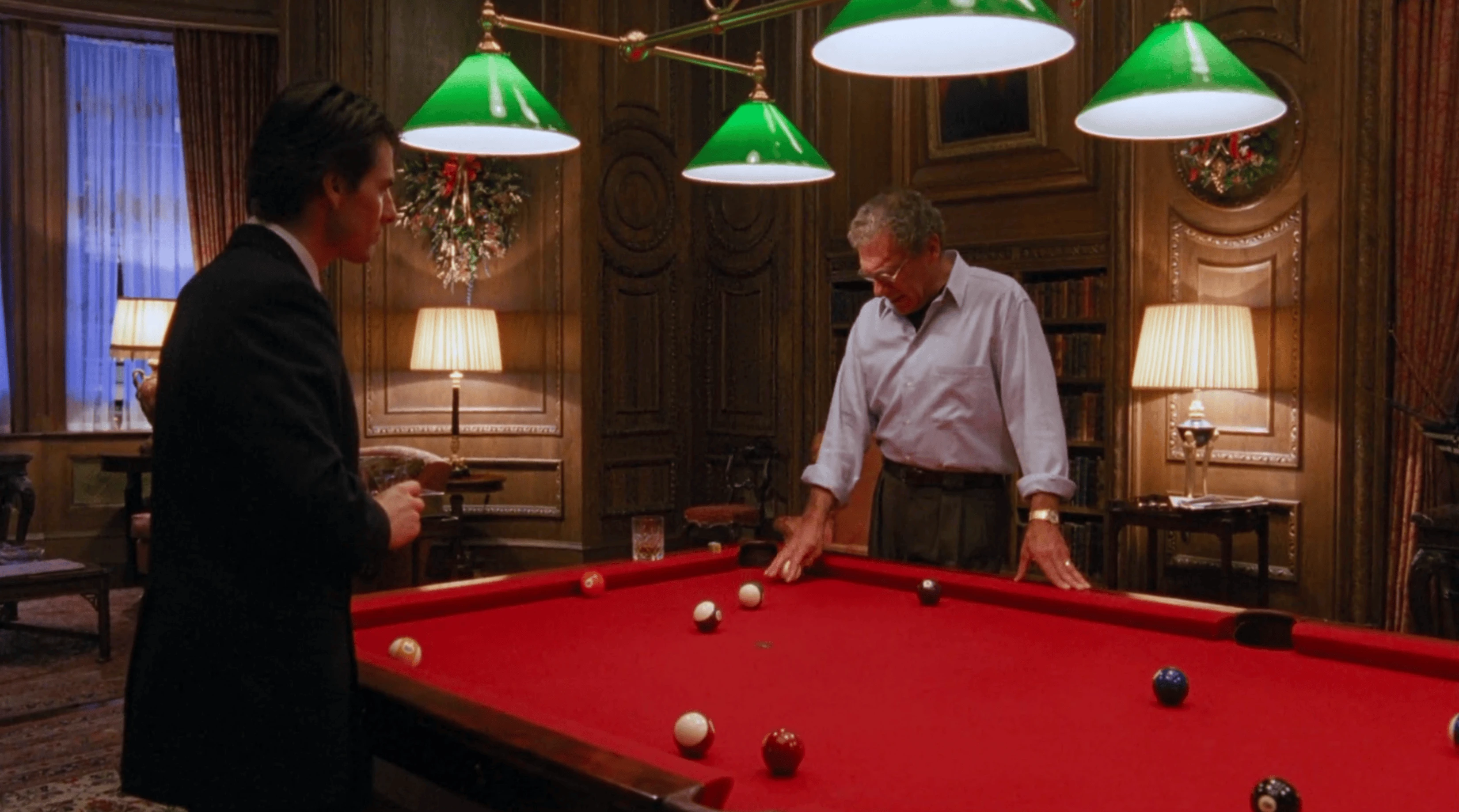
At the end of the film, nothing is truly resolved, and yet something has shifted.
What Bill encounters is not a hidden truth, but the realization of a limit, which is the limit of his own understanding. He becomes aware that what he thought he understood about his wife, about himself, and about what he experienced does not fully correspond to what is.
What is unsettling is not that he does not understand everything, but that this limitation was always present, even before he became aware of it.
We tend to believe that we perceive reality clearly, and that we understand the people and situations we encounter, but in practice we are constantly interpreting and constructing meaning. We organize what we perceive, we fill in what is missing, and we gradually come to take that construction as reality.
The film does not challenge this directly, but reveals it by placing the viewer in a situation where this process becomes noticeable.
What remains after watching it is not an explanation, but a more subtle form of awareness, which is the sense that perception and understanding are always partial, and that what we take for reality is inseparable from the way we construct it.
Once this awareness settles, even slightly, it does not fundamentally change the way we live, but it introduces a different relation to what we perceive. We continue to interpret, to understand, and to move forward, but with the sense that something always escapes us.