I rewatch Star Wars from time to time, not out of nostalgia, but out of curiosity. I watch it to see what I recognize, what I understand differently, and what I failed to notice before.
Writing this article is a way for me to clarify what the saga has been showing me. It allows me to put into words thoughts that have been forming for several weeks and needed a place to settle. It is also a way of sharing how I see things, because I believe Star Wars expresses much more than it appears to on the surface.
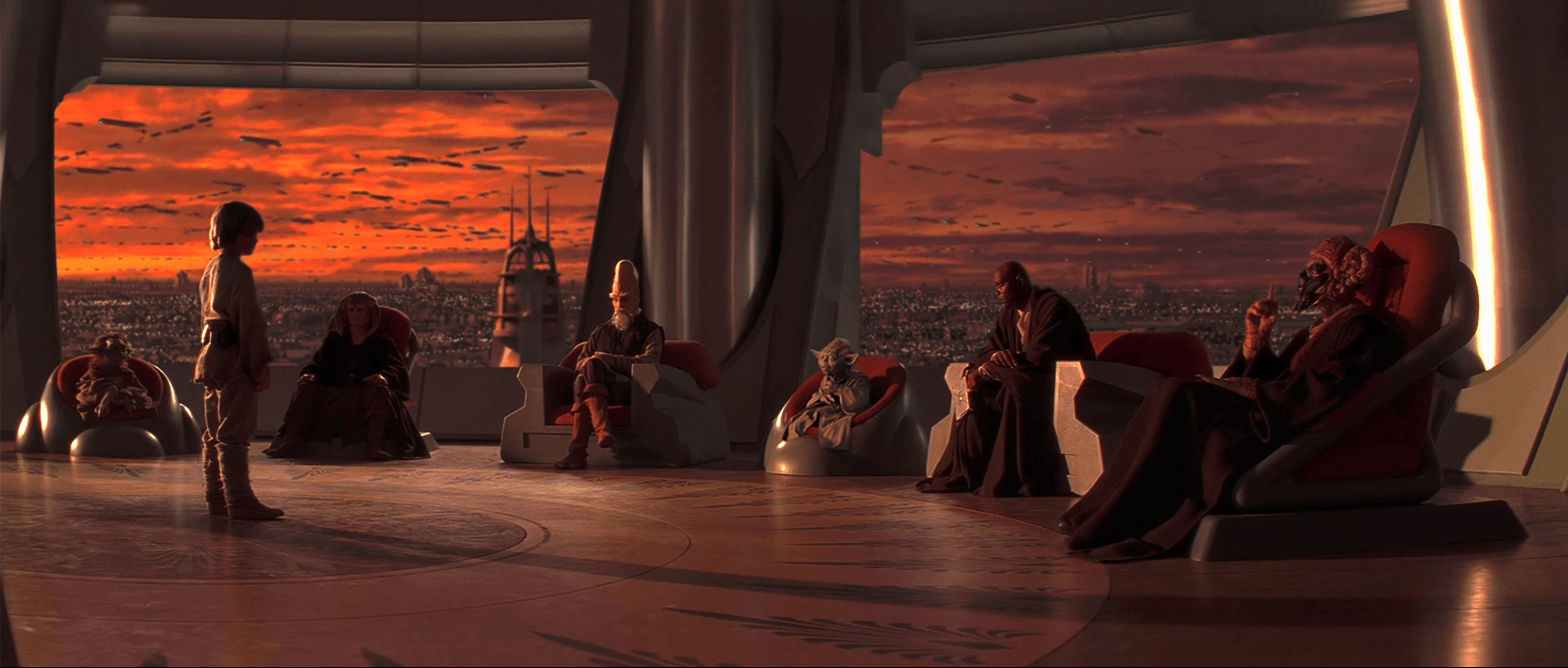
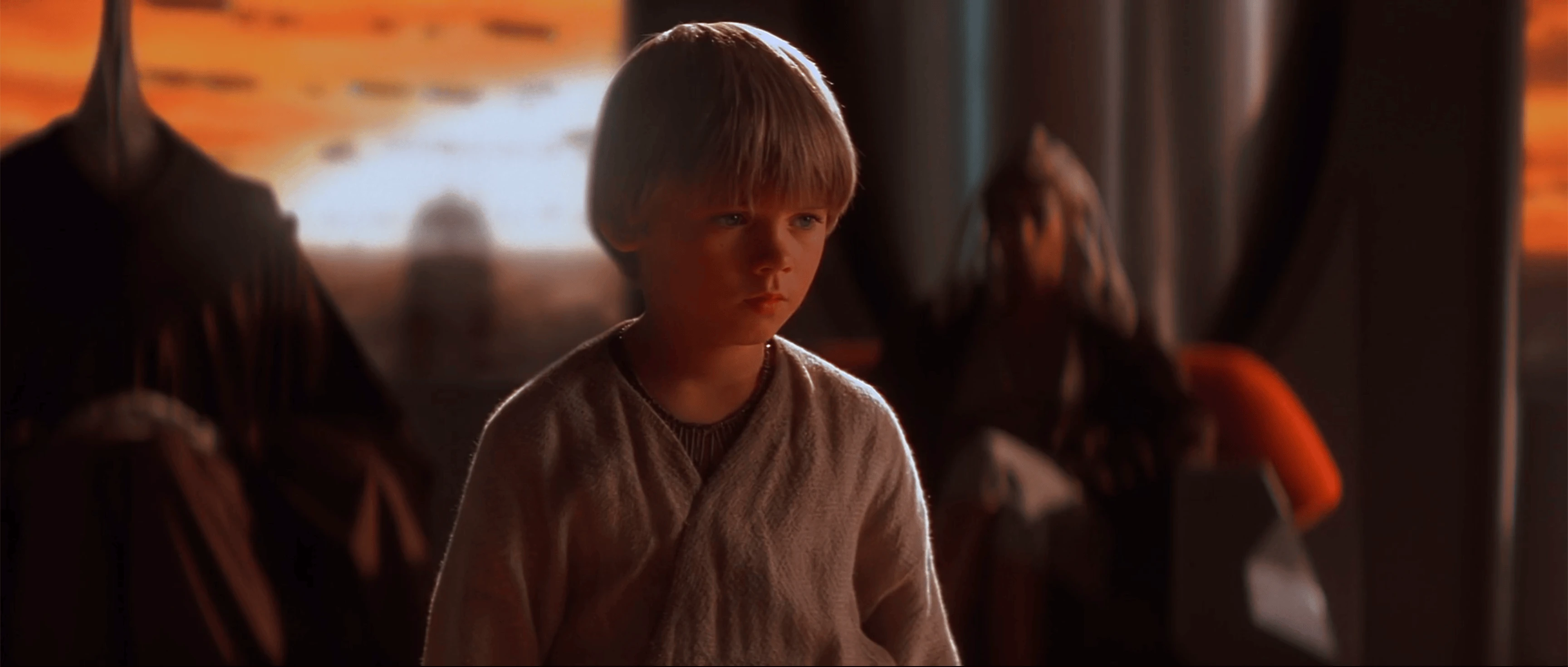
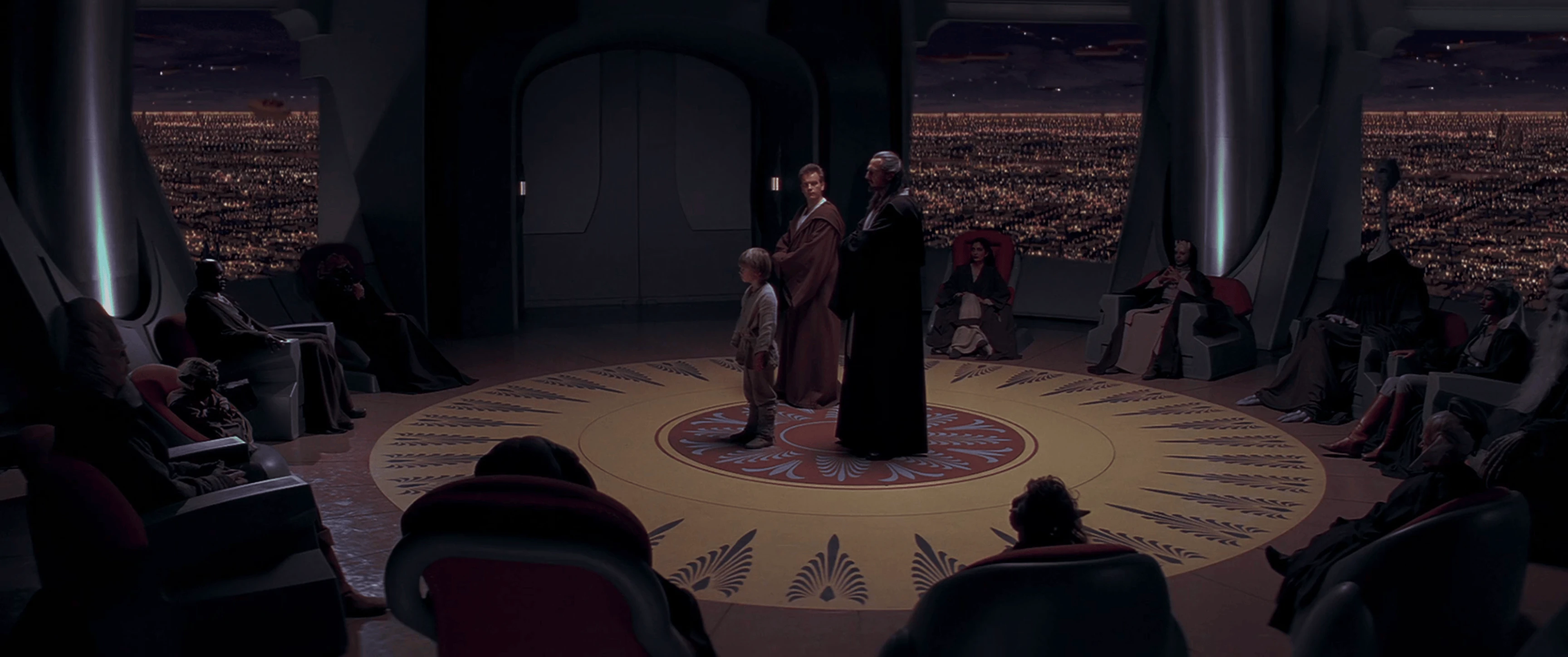
There is a scene in The Phantom Menace that lasts less than two minutes, yet it contains the essence of the entire saga. Anakin stands before the Jedi Council, and Yoda asks him a simple question.
“What do you feel?” “I’m cold, sir.” “Afraid, are you?” “No, Master.”
Anakin says no, but it is not exactly a lie. He simply does not recognize what is happening within him. That is where the problem begins. Someone who cannot see their fear cannot understand it, and someone who does not understand it will inevitably act from it without realizing it.
Everything is already present in that moment. It is not in the battles, the conflicts, the political decisions, or even the final betrayal that things are decided. It happens here, in the response of a child. If you follow that line all the way through, you realize that Star Wars is not a story about a war between good and evil, but about what we do with what we feel.
Fear
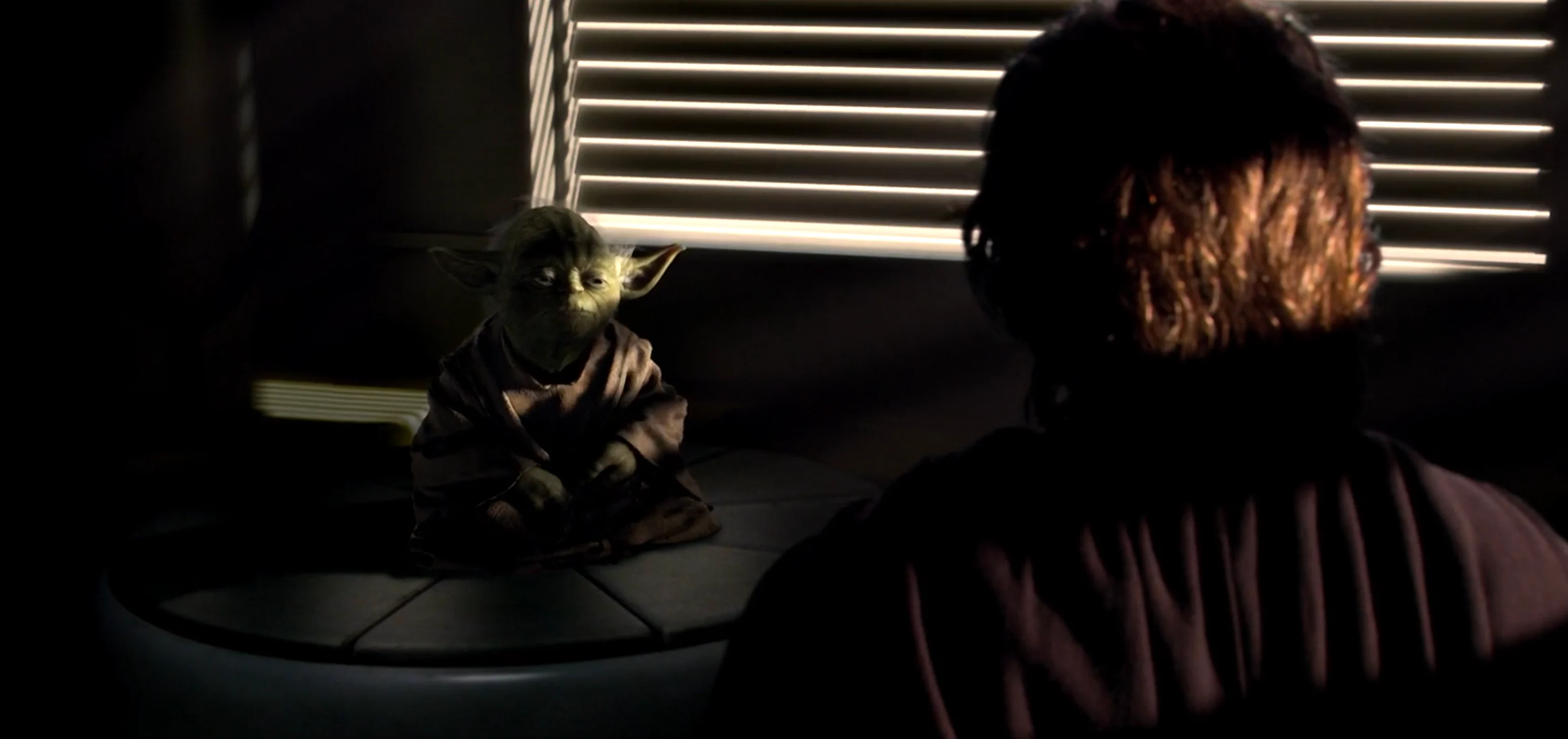
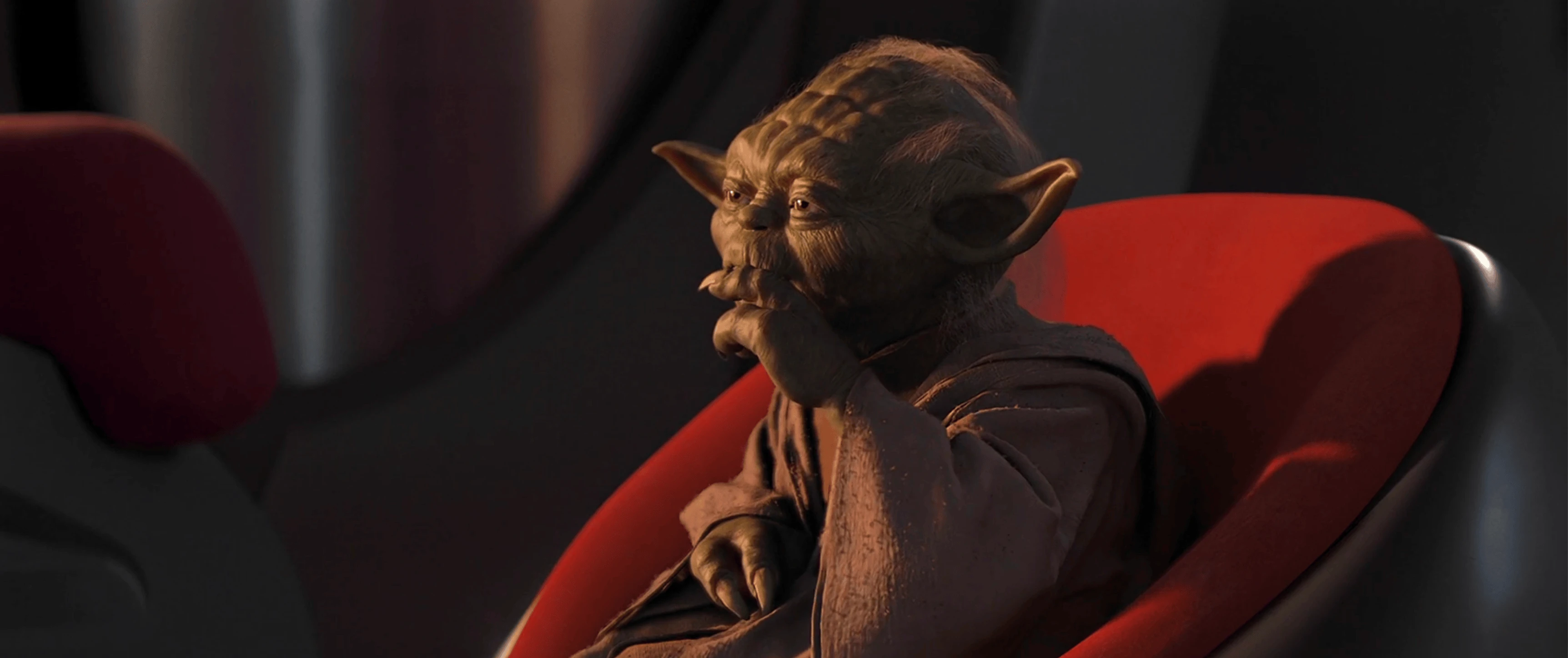
Yoda does not contradict him, he observes.
“Your thoughts dwell on your mother. Miss her, you do. Afraid to lose her, I think.”
Anakin answers, “What does that have to do with anything?” For him, fear is just another emotion. Yoda understands that this apparent indifference is exactly the issue.
Fear leads to anger.
Anger leads to hate.
Hate leads to suffering."
What Yoda describes is not a moral rule, but a concrete sequence. When fear is not acknowledged, it does not disappear. It transforms into anger, anger turns into hate, and hate eventually becomes suffering. This is not a sudden shift, but a gradual movement that begins in the same place every time, in the refusal to look at what is already there.
The fear of losing
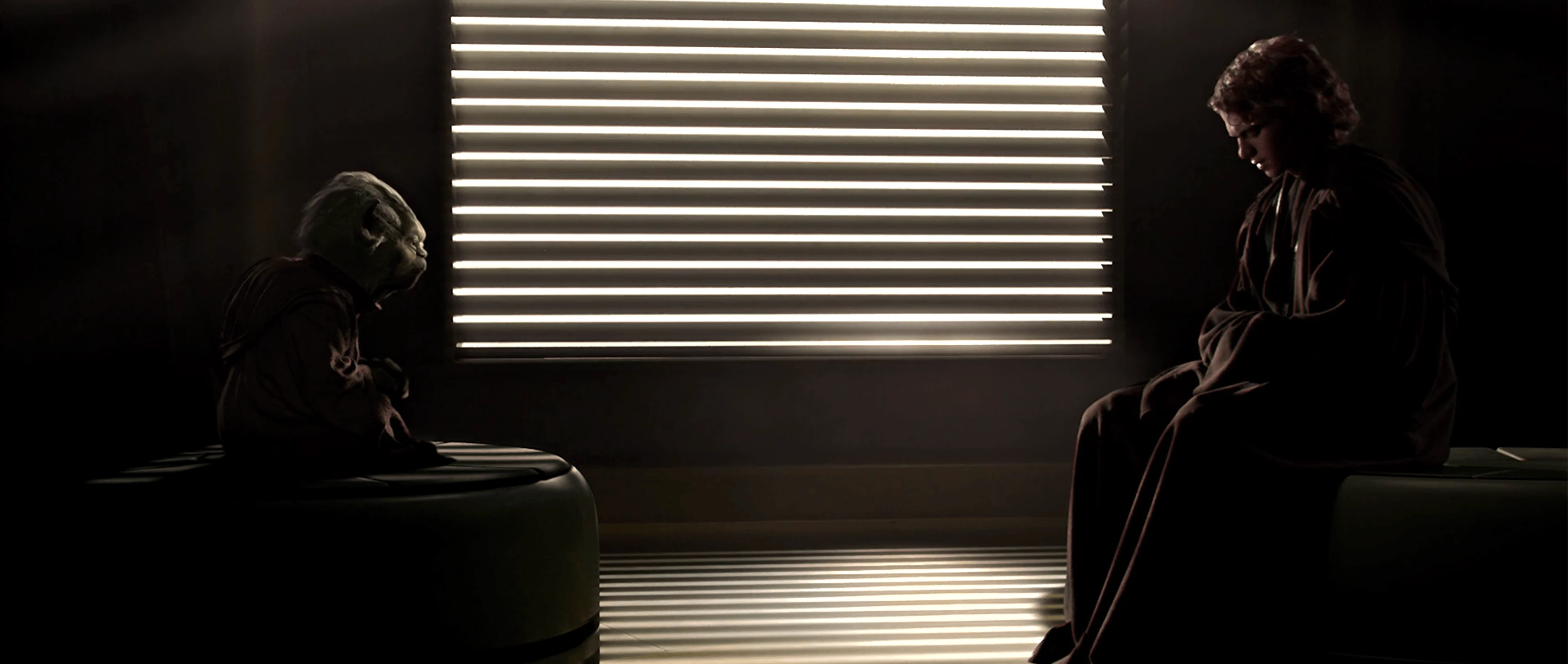
Later, Anakin returns to Yoda, troubled and disturbed by visions he has seen in his dreams.
“Premonitions… these visions you have… Pain, suffering, death.” “Of someone close to you?” “Yes.”
Yoda understands immediately.
“The fear of loss is a path to the dark side.”
This is more specific than fear in general. It is attachment. When you love someone to the point where you cannot accept the idea of losing them, you no longer live fully within the relationship. You live in anticipation of what might happen. Over time, this fear distorts everything, the way you behave, the decisions you make, and the way you see the other person. You try to control, to protect, to prevent, and in doing so you end up damaging what you were trying to preserve.
“Death is a natural part of life. Rejoice for those who transform into the Force. Mourn them not. Miss them not.”
This may sound distant, but it points to something fundamental. Life includes loss, and resisting that reality creates constant tension. What Yoda describes is not a flaw in character, but a mechanism. You love, you fear losing, you try to hold on, and eventually you lose yourself in that need to hold on.
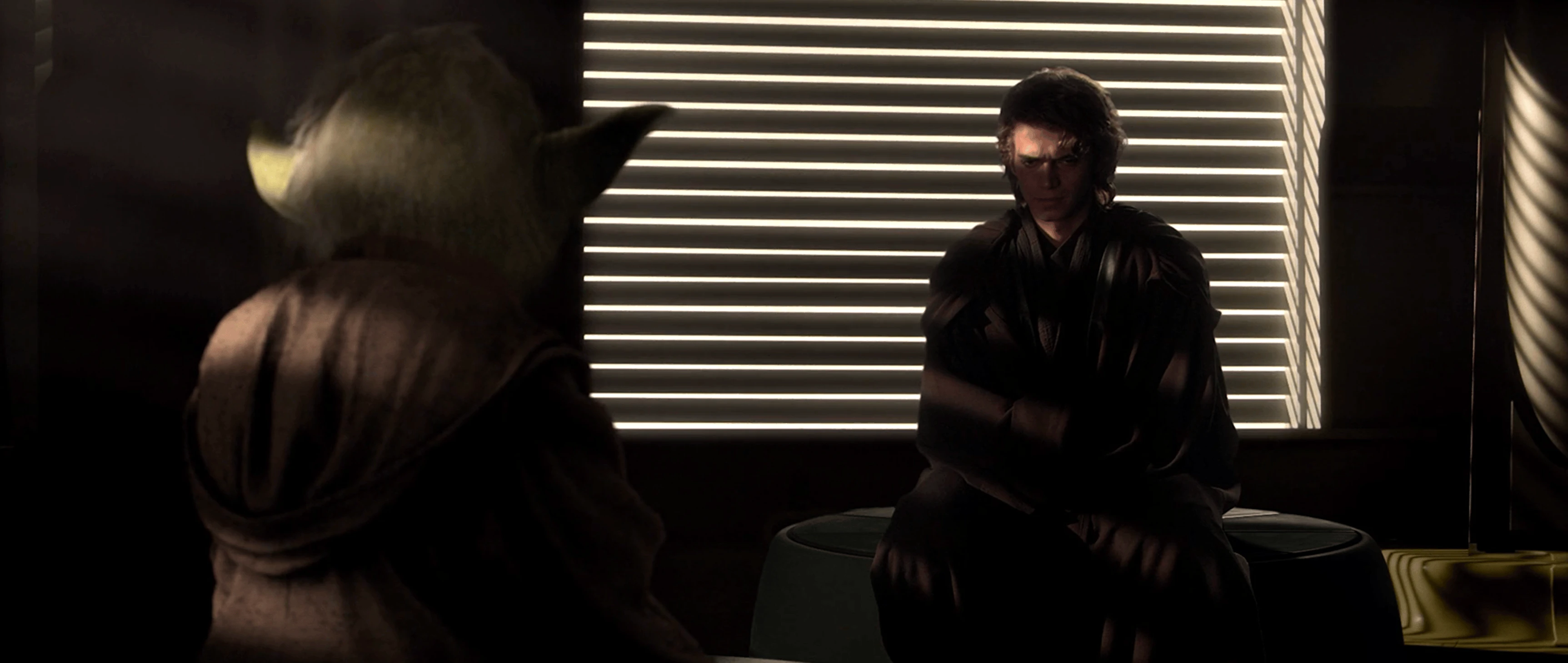
Anakin then asks the most honest question he can ask.
“What must I do?”
Yoda is not asking him to stop loving. He is asking him to accept that what he loves can change, leave, or disappear. This is a difficult position to hold internally, and Anakin cannot accept it. He answers: “This time I will not let these visions come true.” At that moment, he is no longer trying to understand life. He is trying to prevent what he fears. That is where his fall begins.
The point of no return
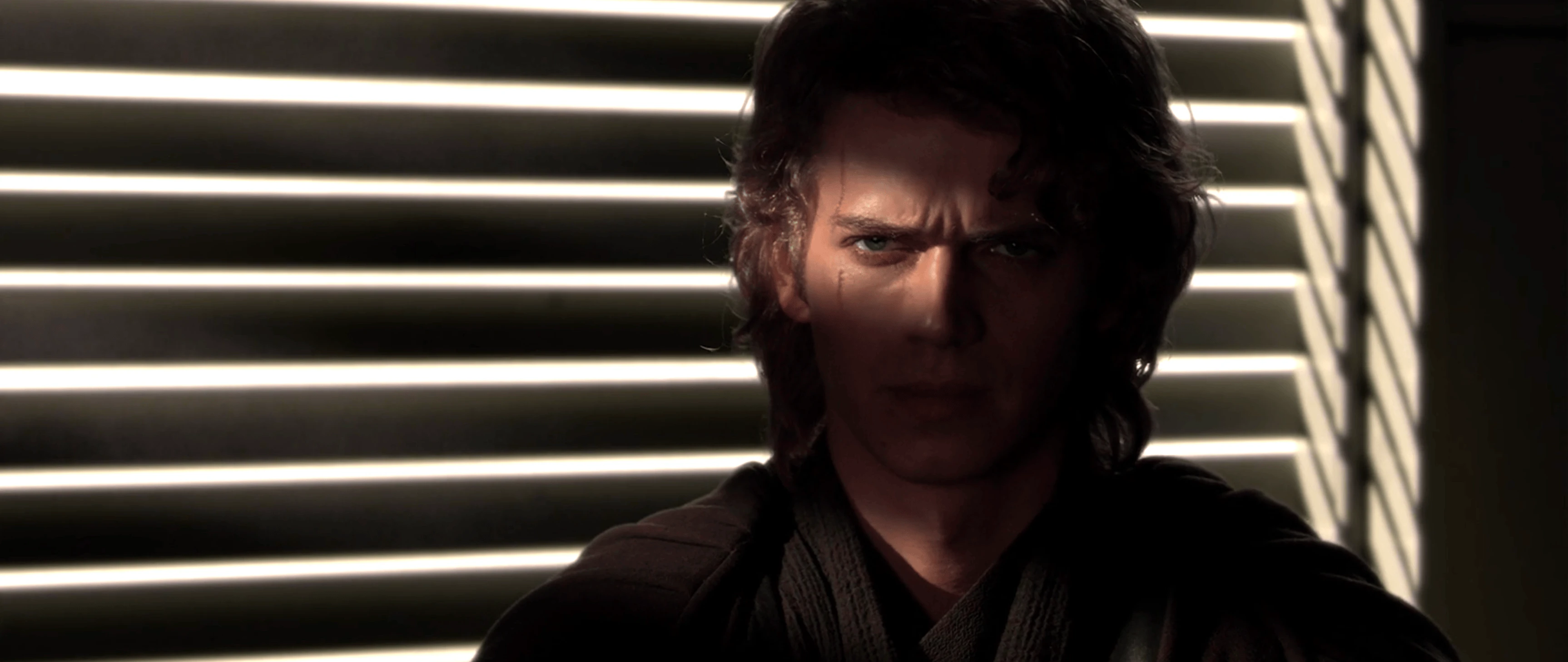
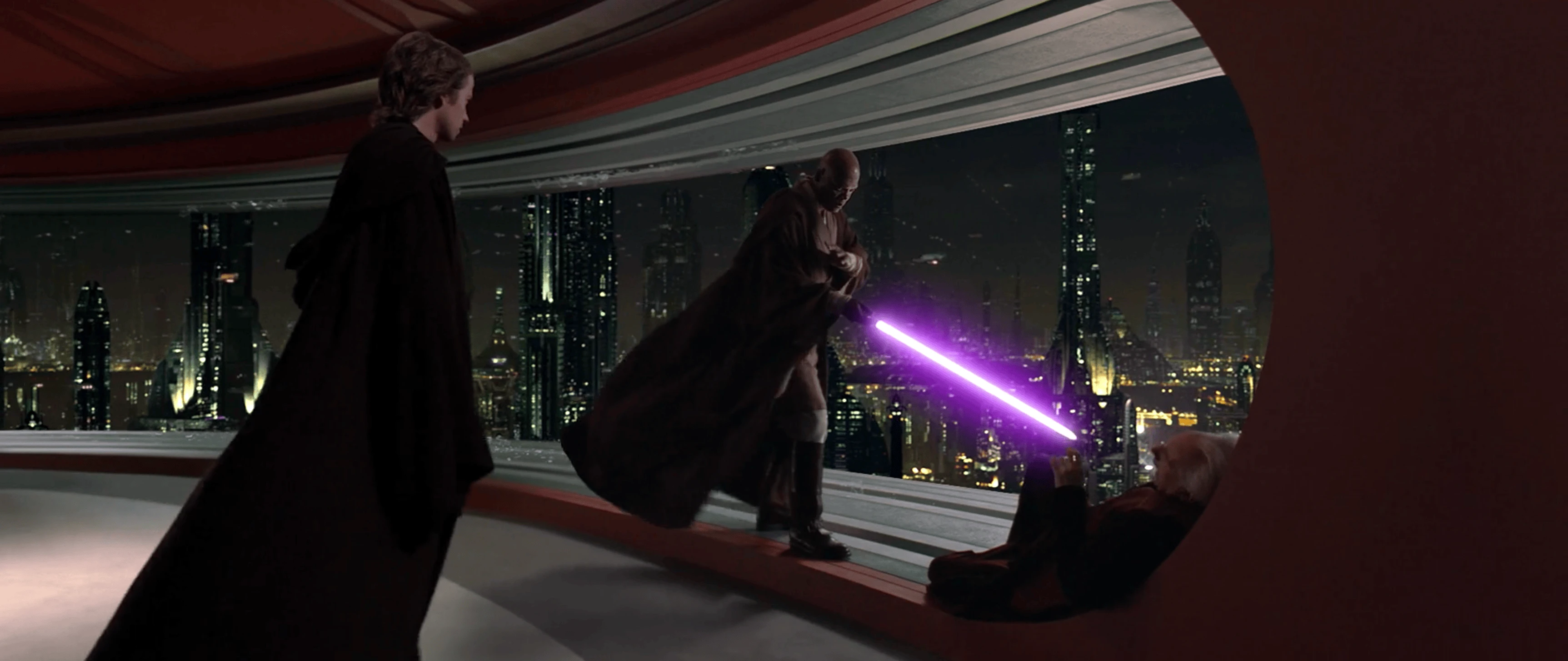
It is often said that Anakin’s fall is inevitable, but there is a precise moment in Revenge of the Sith where it could have gone differently. Mace Windu has defeated Palpatine, and the situation is under control. Anakin does not need to act.
But he cannot remain still, because Palpatine has offered him something, the possibility of saving Padmé.
In that moment, Anakin does not choose the dark side out of conviction. He chooses not to lose. He cuts off Mace Windu’s hand.
This decision lasts a second, but it comes from a fear that has been building for years, reinforced every time he refused to face it. His fall is not dramatic, it is consistent. It is the direct consequence of that first moment when he could not recognize what was happening inside him.
Power and fragility
I often wondered why Anakin was so powerful in the Force while being so overwhelmed by his emotions.
The answer I arrived at is that his power does not come from his emotions. It exists in him independently, which is why Qui-Gon recognizes it immediately, and why the Council sees him as the Chosen One. His emotions do not create his power, but they amplify it in a way that makes it unstable.
The Force is connected to perception and sensitivity. A trained Jedi accesses it through discipline and detachment. Anakin accesses it through intensity. He feels everything completely, without filter, and that openness magnifies everything he carries, both what sustains him and what destabilizes him.
The Jedi respond to this by encouraging detachment. This approach may appear cold, but it has a logic. Anakin cannot rely on it. His emotions are too strong, and instead of allowing them to pass, he tries to control them or suppress them. What is not acknowledged does not disappear. It accumulates, and eventually takes over.
His power is not the problem. The problem is that he never learned how to carry it.
Qui-Gon
Qui-Gon Jinn is not as central in the saga as Obi-Wan or Yoda, but he may be the one who most fully embodies what Yoda teaches. It is not a coincidence that he is the one who brings Anakin to the Council, nor that he is later rejected as a master.
Qui-Gon is not impulsive or rebellious. He is simply present.
When Obi-Wan projects himself into what comes next, Qui-Gon brings him back to something immediate.
and never lose sight of the present moment."
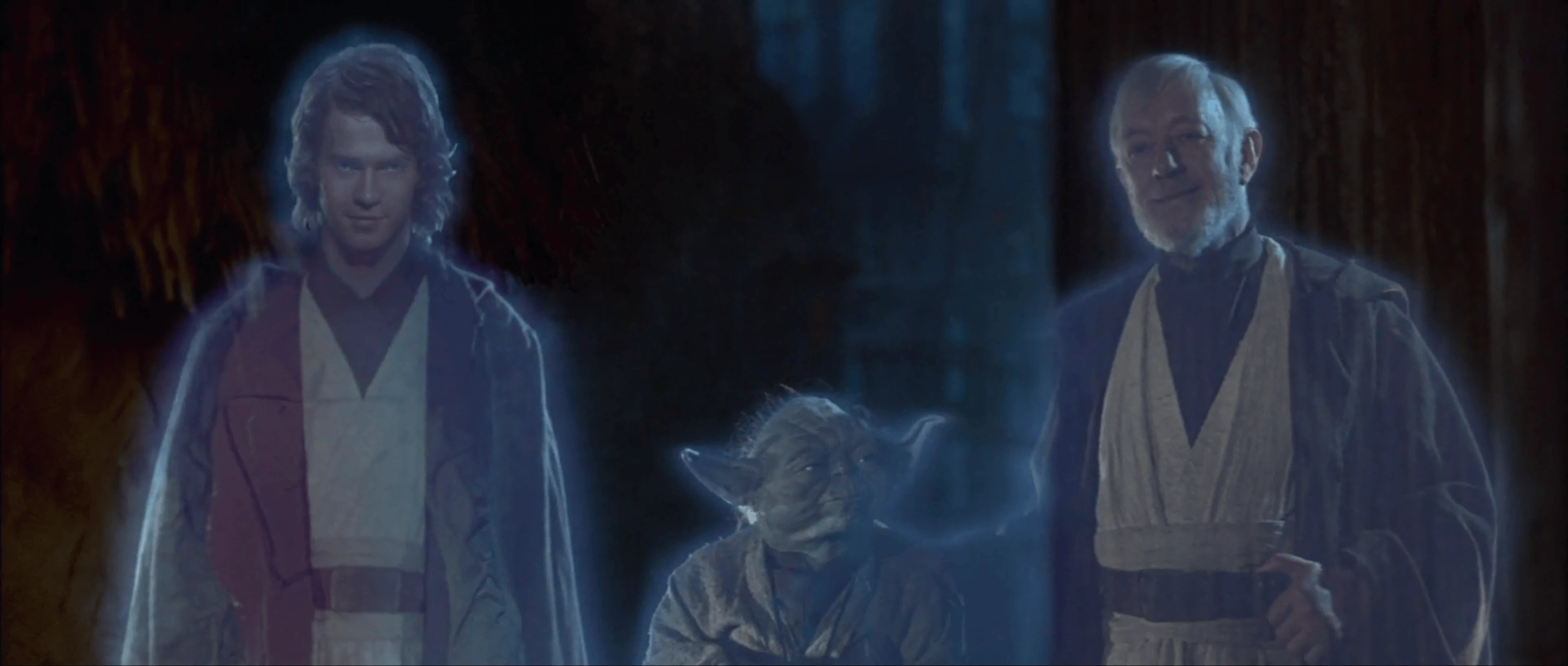
He is not speaking about technique, but about a way of being. What sets him apart is that he does not stand outside of life trying to control it. He is within it, fully. Even his death reflects this. He does not resist it or try to escape it. He accepts it. And it is he who later finds the path to immortality within the Force, before Yoda and Obi-Wan.
He is not the most powerful. He is the most free.
Obi-Wan
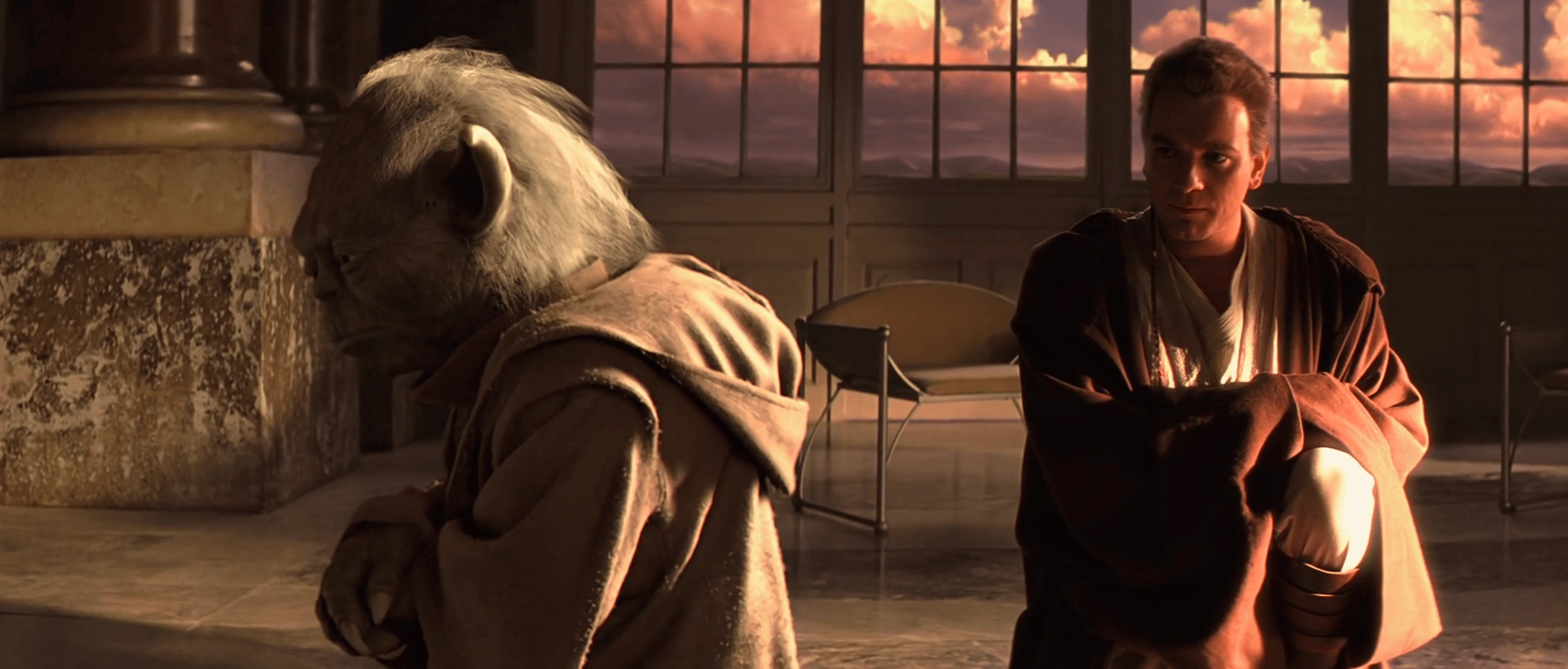
There is a quiet irony in the saga. Obi-Wan knows Anakin better than anyone, lives beside him for years, and yet does not see what is happening.
This is not due to a lack of ability, but to the way he perceives Anakin. He sees him through the framework of the Jedi Order, which values control and discipline. When Anakin shows fear or attachment, Obi-Wan sees a Jedi failing to conform, not a person struggling internally.
This is where Qui-Gon might have seen something different, because he had the ability to observe what was present without filtering it through expectation.
Obi-Wan is loyal and reliable, but limited by the structure he belongs to. It is only later, in exile, that he may begin to understand what he did not see.
The Force
The Force is often described as something to be mastered, but the films suggest something different.
Obi-Wan describes it as an energy field created by all living things, something that surrounds and connects everything. Qui-Gon adds something essential. The Force is not something we develop. It is something we access when we stop moving away from it.
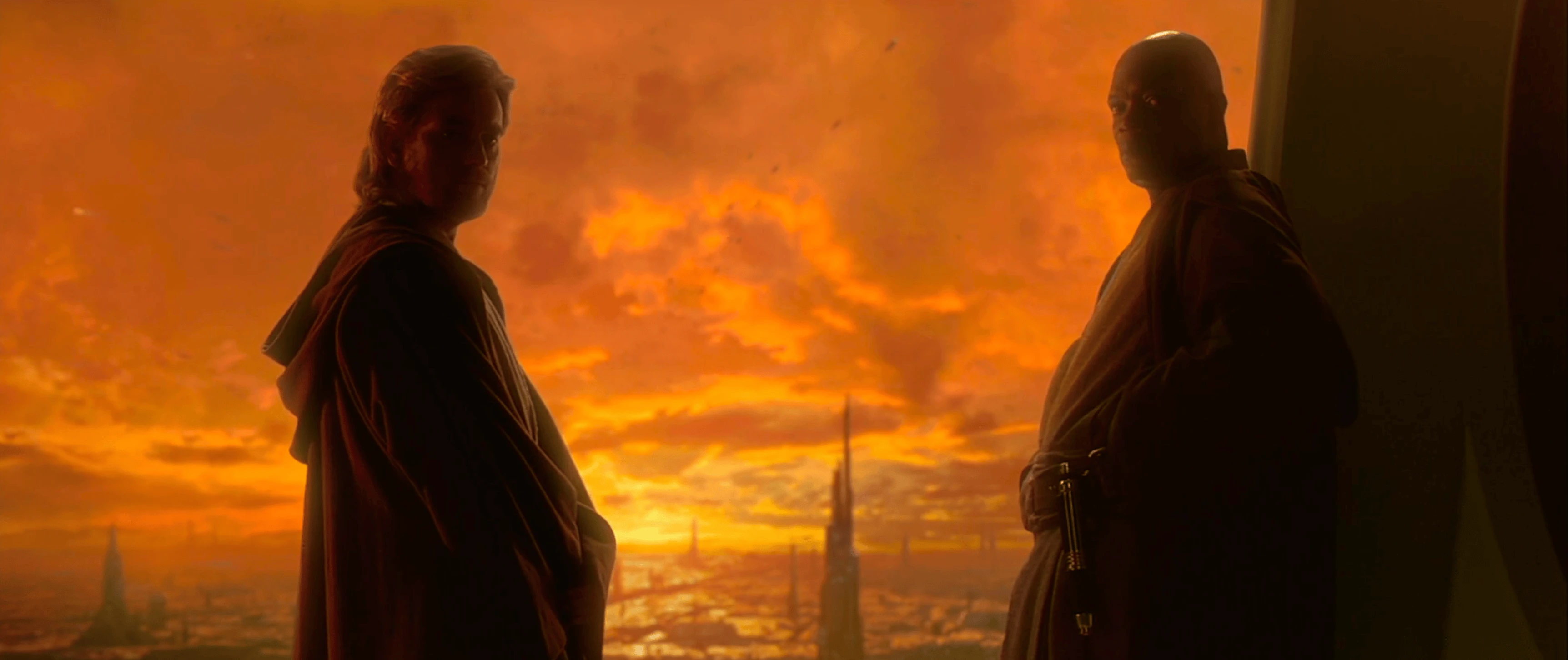
To be attentive is to be available to what is present. To remain in the present moment is to not lose oneself in projections or fears. The issue is not the absence of the Force. It is the absence of presence.
Luke
Luke illustrates this difficulty clearly.
When Yoda meets him, he does not question his courage or determination, but something deeper.
“All his life has he looked away… to the future, to the horizon. Never his mind on where he was, what he was doing.”
Luke is not incapable, but divided. His attention is elsewhere, in what he hopes for or fears, and as long as that division exists, his actions remain unstable.
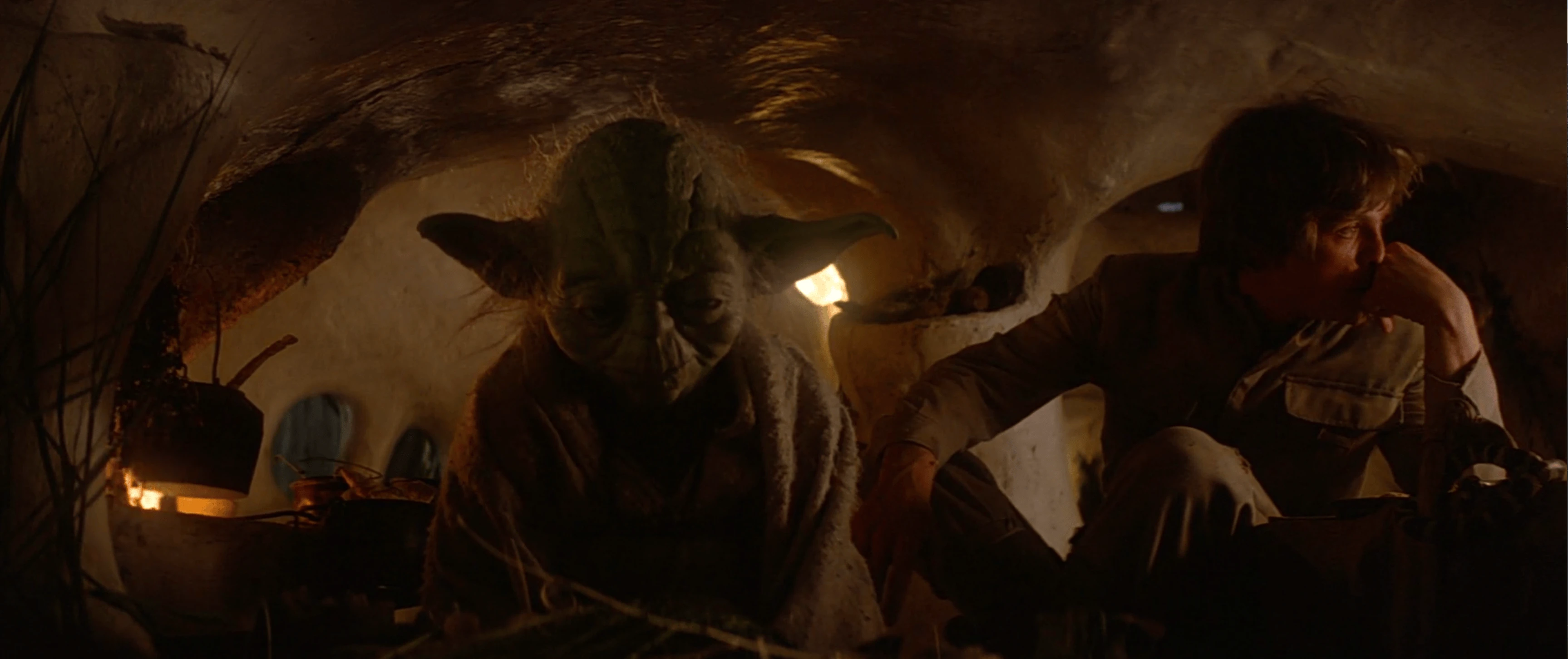
The scene with the X-Wing makes this visible. Luke believes it is too large to move, and that belief is already a conclusion. Yoda does not try to reassure him. He changes the way the situation is approached.
“Size matters not.”
The difference between them is not physical ability, but perception. Luke sees separation and resistance. Yoda does not.
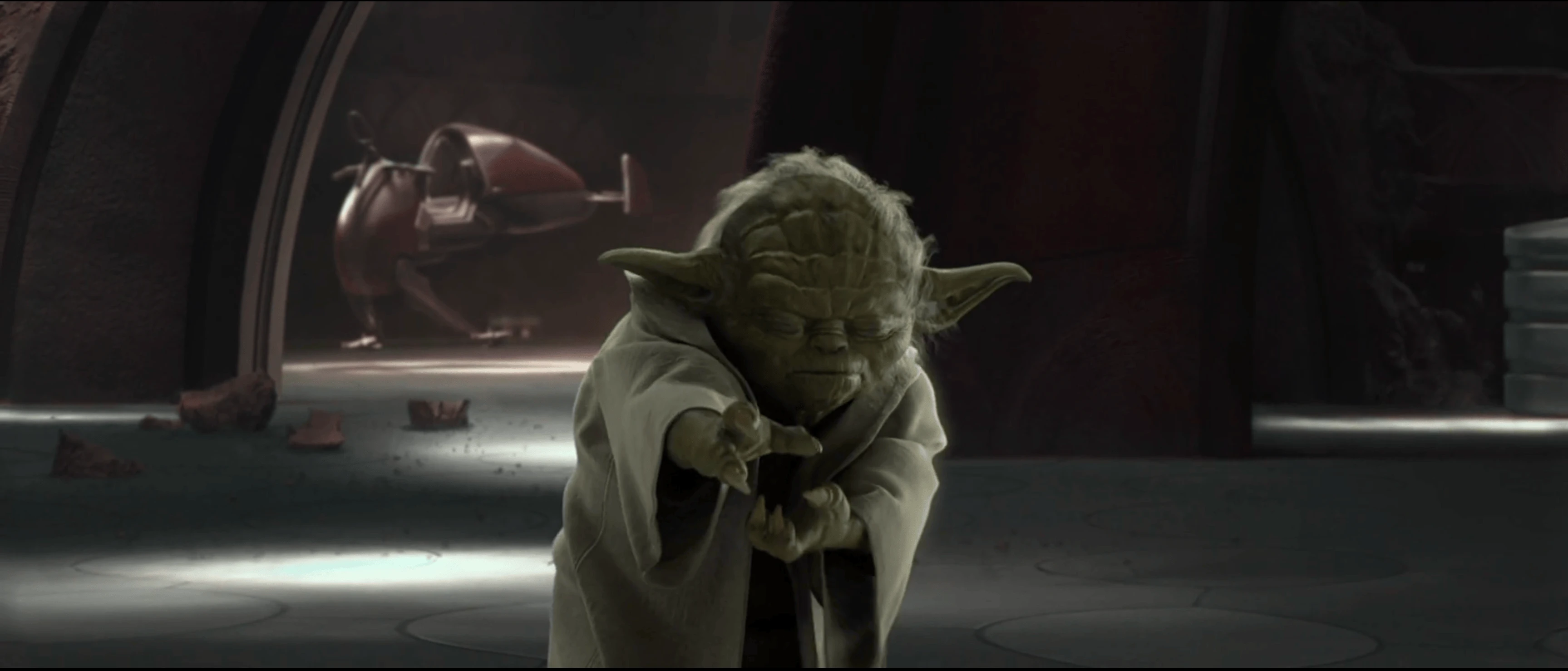
When Luke says he cannot believe it, Yoda answers that this is why he fails. As long as doubt and fear divide attention, action cannot be whole.
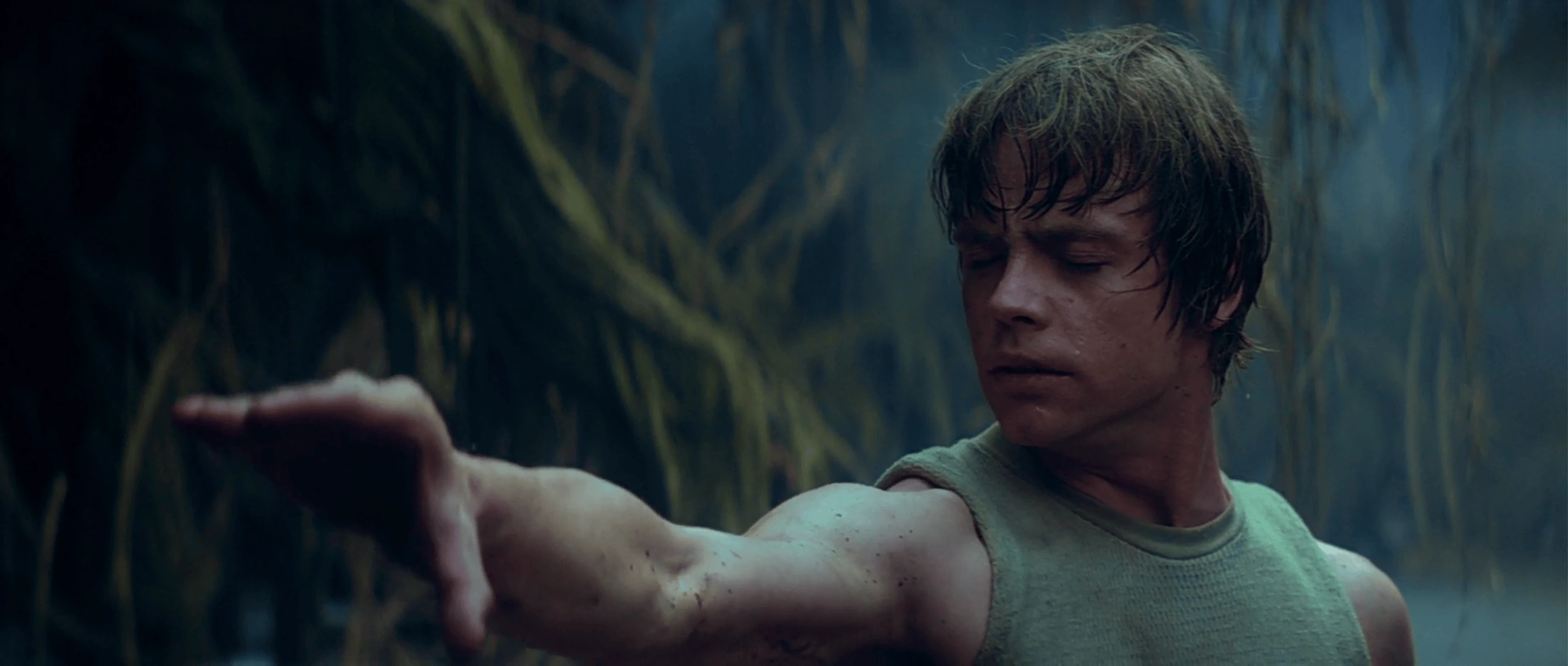
The cave
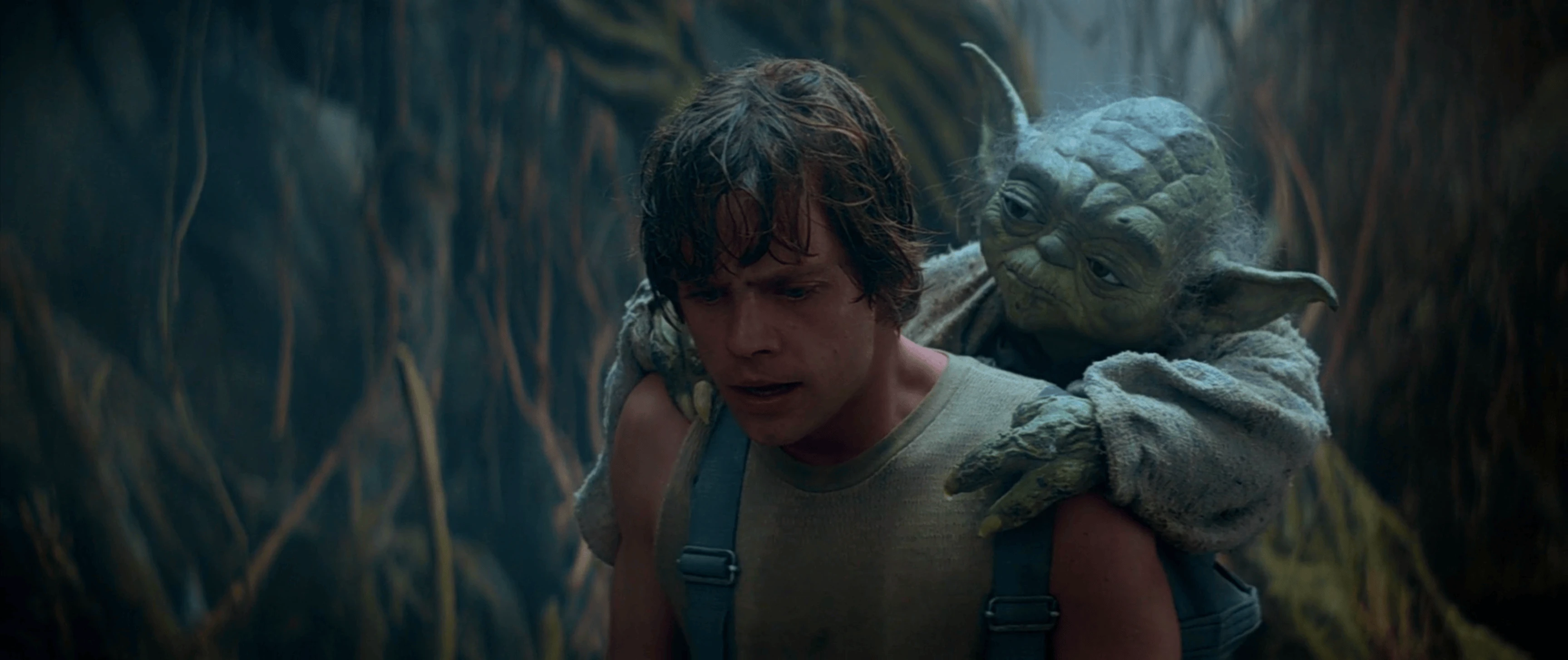
This is one of the most important scenes in the saga.
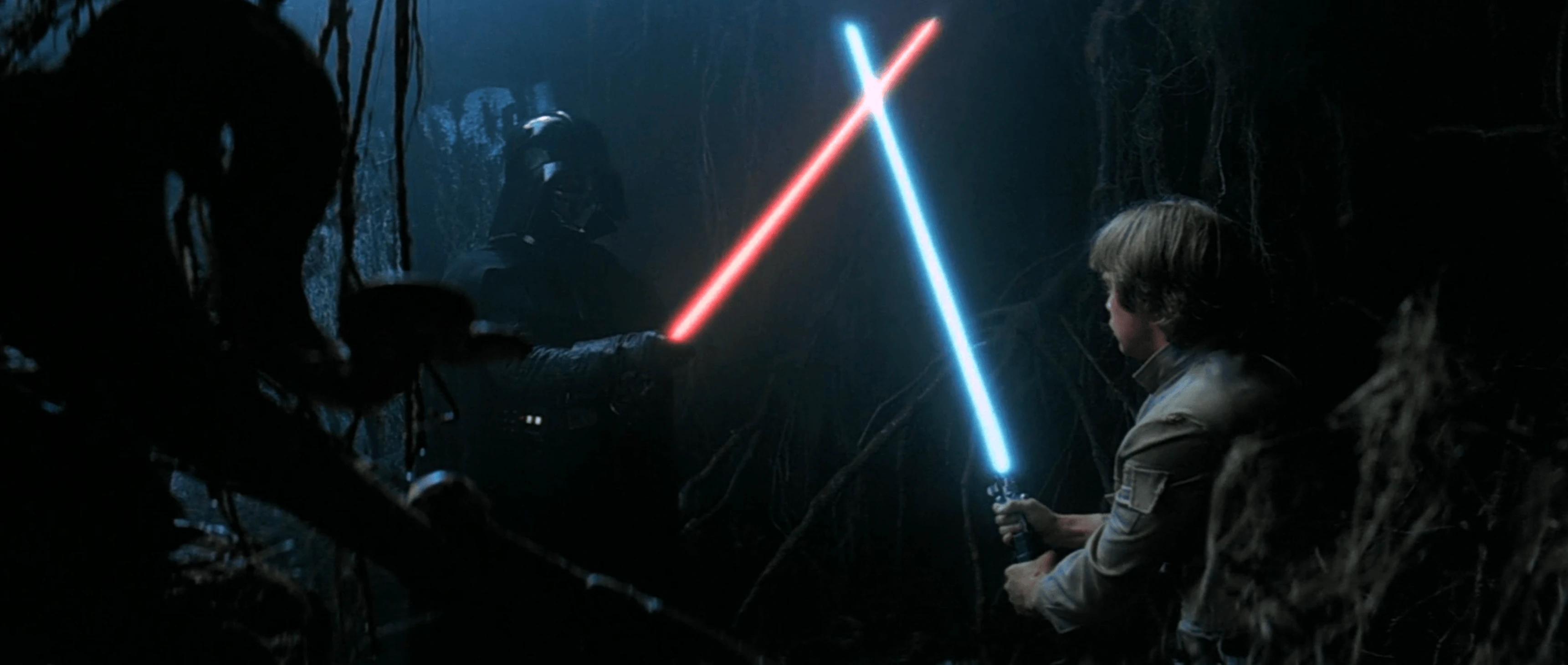
Before entering the cave, Yoda tells Luke that he will not need his weapon. Luke takes it anyway. This reflects how he approaches the unknown. When faced with something he does not understand, he prepares to fight.
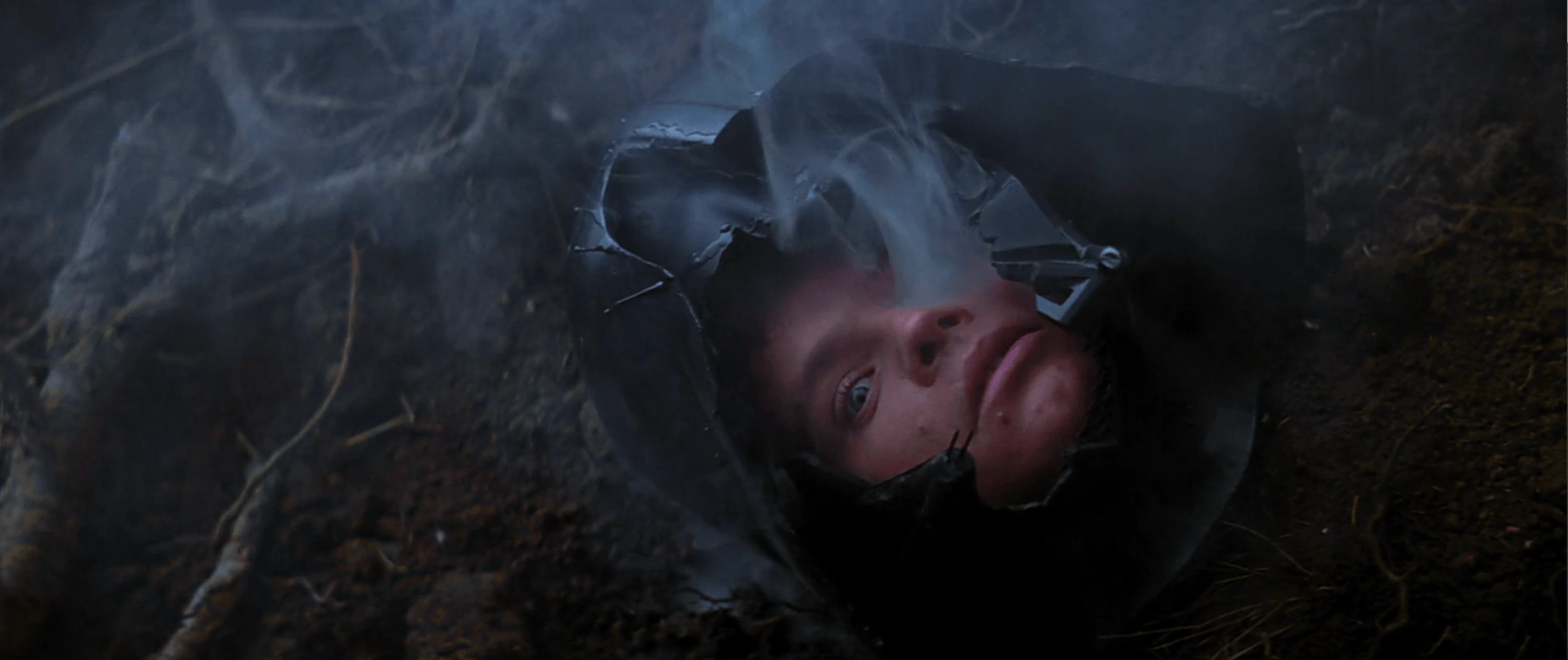
Inside, he confronts Vader, defeats him, and sees his own face behind the mask.
This is not a confrontation with an external enemy. It is a confrontation with himself. What he projects onto Vader already exists within him. He leaves without having truly understood, weapon in hand. It is only at the end, facing the Emperor, that he will know what to do with that truth.
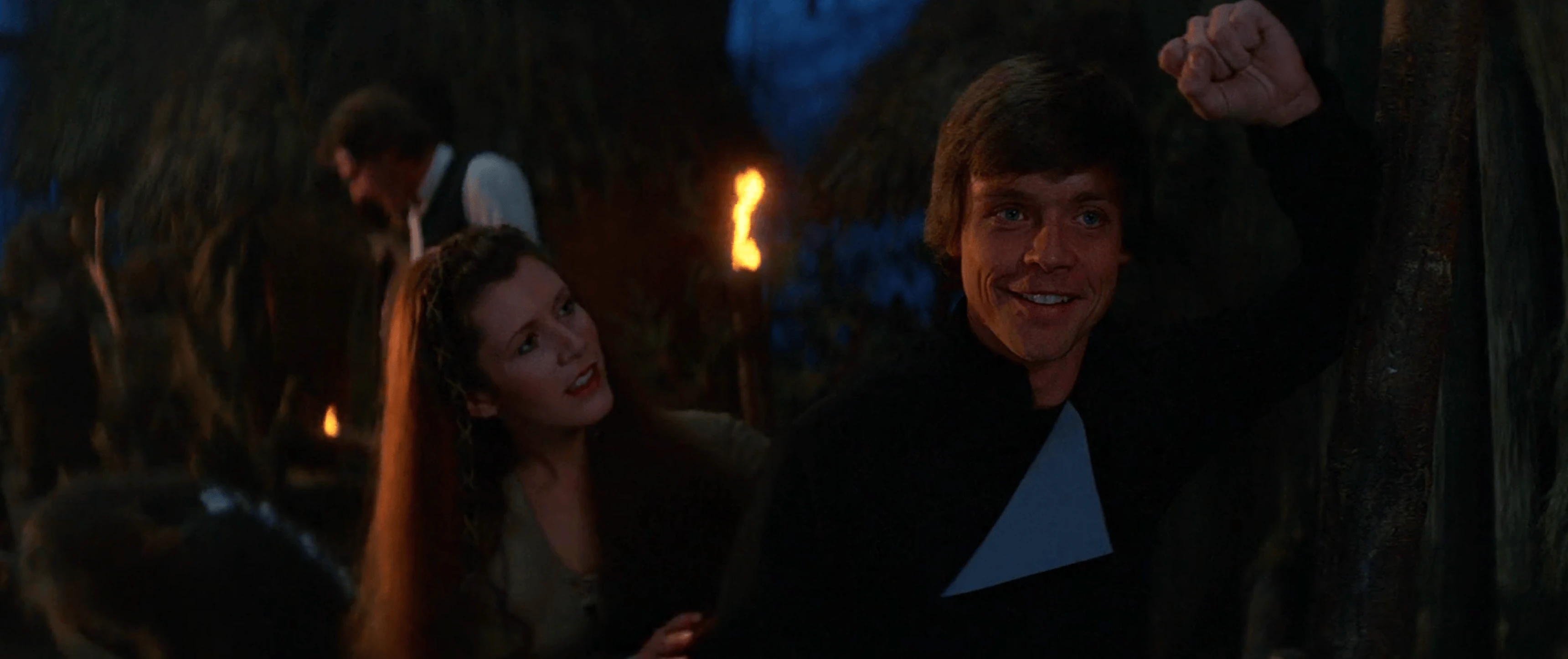
The decisive moment
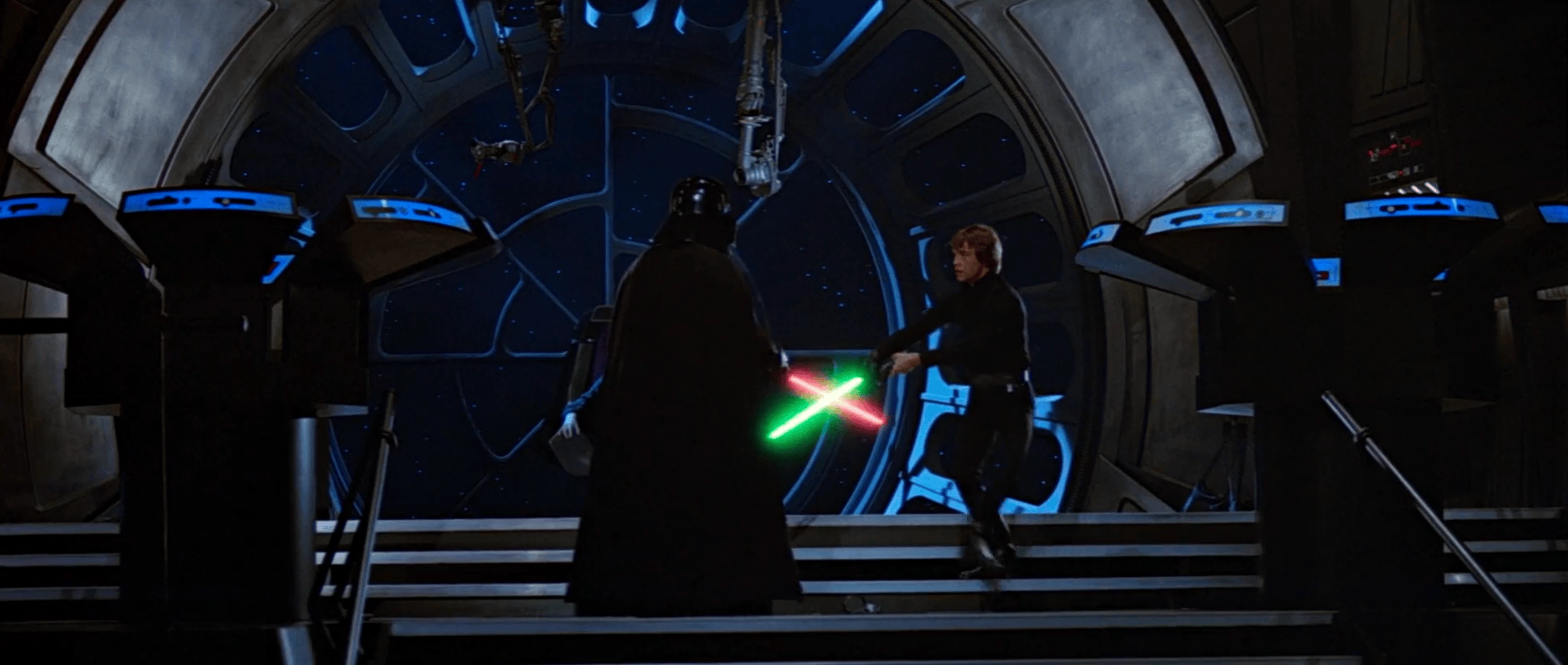
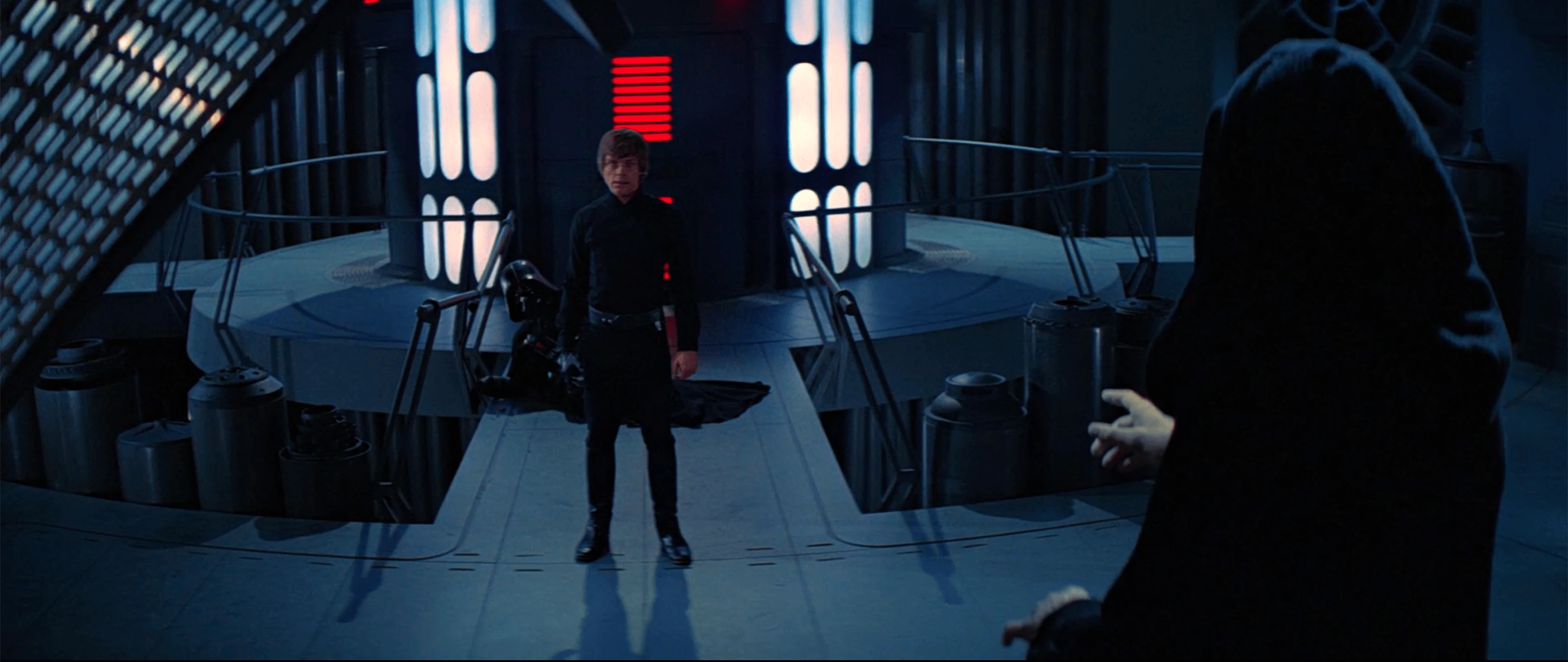
At the end, Luke faces a situation similar to Anakin’s. Fear, attachment, anger, and pressure are all present.
He gives in, attacks, and overpowers Vader.
Then he looks at his hand.
This moment changes everything. Luke lost his hand against Vader in The Empire Strikes Back, and in its place he carries a mechanical hand, identical to his father’s. When he looks at that hand during the final confrontation, he sees the image of what he is becoming. A man who fights from fear, who acts from anger, who pushes forward because he cannot accept losing. Exactly like Anakin. Something stops within him at that moment.
He lowers his saber.
“I will not turn to the dark side. I am a Jedi, like my father before me.”
What happens here is not external. Luke does not eliminate fear or anger. He allows them to be present without acting from them. He accepts that he cannot control the outcome, and remains there without resisting. This is what he learned on Dagobah, not a technique, but a way of being.
The mirror
Anakin and Luke reach the same point.
They share the same fear, the same attachment, the same intensity. Anakin stands in the Senate chamber, the power to save Padmé within reach, and he acts. Luke stands before the Emperor, the power to save his father within reach, and he lowers his saber.
What separates them is not power, but what they do in that moment. Anakin acts to prevent loss and loses everything. Luke accepts the possibility of loss and, in doing so, preserves what matters.
Conclusion
For a long time, I saw Star Wars as a story of battles and mythology.
At some point, I began to pay attention to what happens just before the action, the moment where a decision is not yet made. That is where everything takes place.
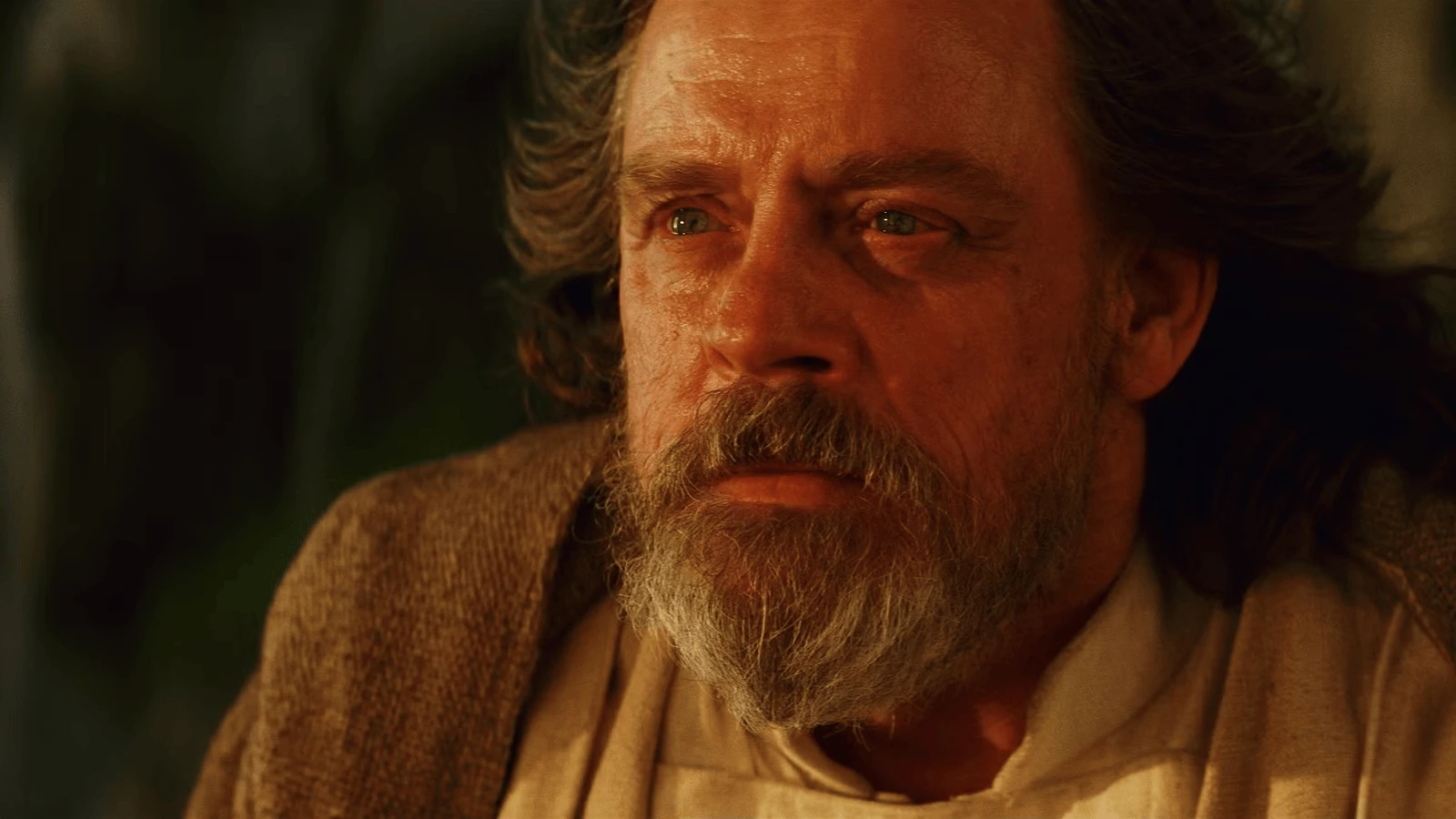
Anakin tries to control what he fears and loses everything. Luke arrives at the same place, but instead of trying to win, he stops.
And in that moment, he does something more difficult than fighting.
He accepts.